
Cordless Battery Platform Lock-In: How to Pick a Brand
The short answer
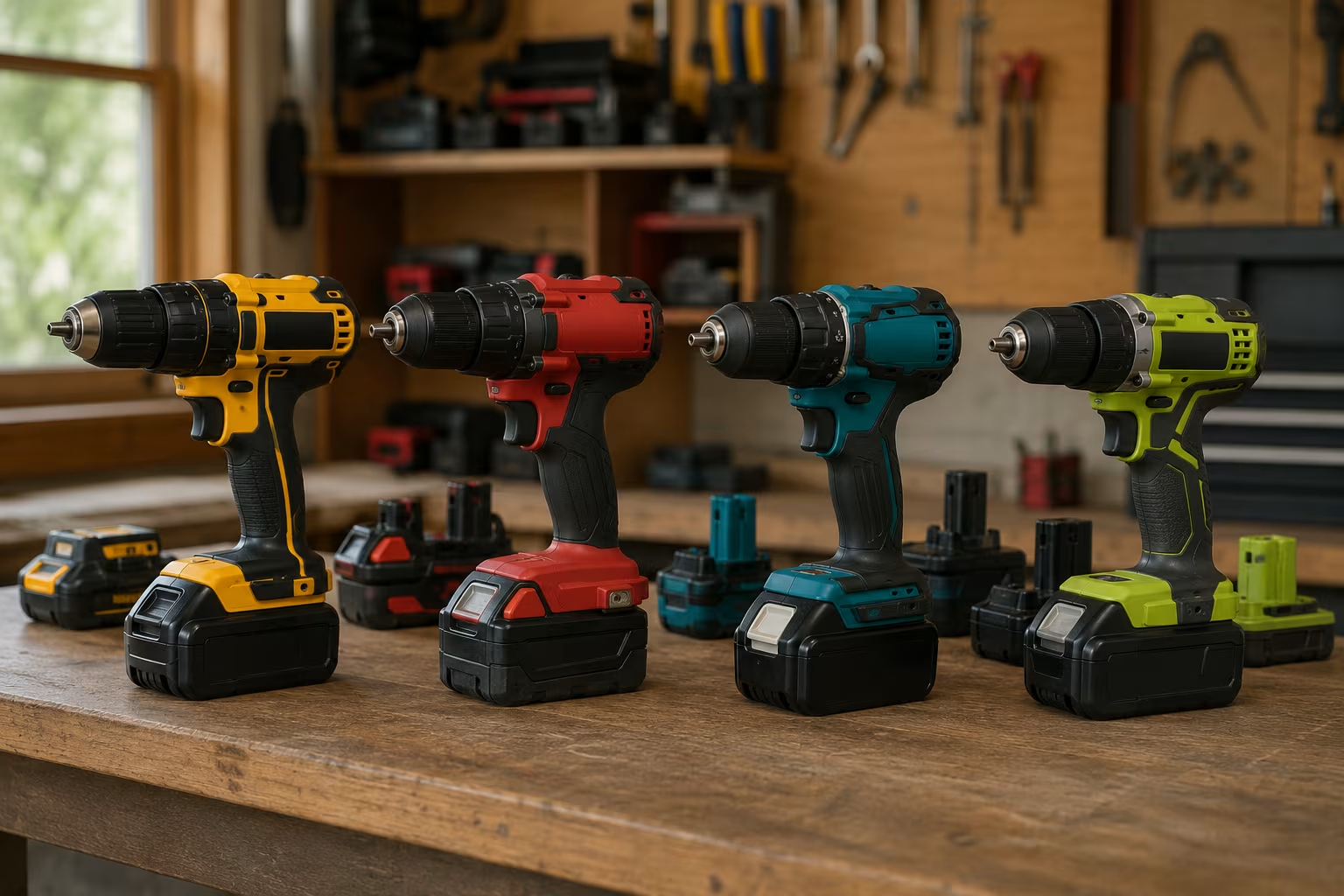
Cordless tool battery platforms (DeWalt 20V MAX, Milwaukee M18, Makita LXT, Ryobi ONE+, and others) are proprietary by design. The batteries from one brand only work in the same brand's tools, by the manufacturer's deliberate choice — they want you to keep buying from them. Once you commit to a brand by buying a few tools and batteries, switching is expensive enough that most users stay.
The lock-in is real but not unfair. Pick the brand carefully on the first major purchase and commit. For DIY and home use, Ryobi ONE+ offers the broadest tool selection at the lowest entry cost. For professional construction and serious DIY, Milwaukee M18 and DeWalt 20V MAX dominate at higher prices. For fine woodworking and precision applications, Makita LXT is highly regarded.
The wrong move is buying single tools from different brands as needs arise. After three or four purchases across brands, you have three or four chargers, three or four battery systems, no way to share batteries between tools, and you are stuck buying expensive replacement batteries for each platform indefinitely.
Why batteries do not cross brands
The technical reality: a Milwaukee M18 battery and a DeWalt 20V MAX battery contain very similar lithium-ion cells (often from the same suppliers — LG, Samsung, Panasonic). The voltage is nearly identical (M18 is 18V nominal; DeWalt 20V MAX is also 18V nominal with the 20V being the peak voltage marketing). The capacity, performance, and even physical size are comparable.
The locking tabs, the electrical connector pins, and the communication protocols between battery and tool are intentionally different. The differences serve no engineering purpose; they exist to prevent cross-brand compatibility.
This is not unique to power tools. The same logic applies to vacuum cleaners (Dyson batteries do not fit Shark), kitchen appliances (KitchenAid batteries do not fit Cuisinart), and most consumer-electronic battery systems. The vendor lock-in is intentional and profitable.
Third-party adapters exist for some combinations (most commonly DeWalt or Makita batteries adapted to Ryobi tools). These adapters work but have caveats — they may invalidate warranty on the tool, they may not provide all the communication features that genuine batteries do, and they add bulk to the tool-battery interface. For most users, adapters are not the right answer.
The major platforms compared
The cordless tool world has several major players with distinct positioning.
DeWalt 20V MAX. Widely available, broad tool selection, strong professional adoption. Higher price than budget brands. Excellent performance across most tool categories. The Atomic and Brushless sub-lines offer different capability tiers within the platform.
Milwaukee M18. Premium professional platform. Highly regarded in trades (electricians, plumbers, HVAC, construction). Often the most innovative product introductions. Higher prices than DeWalt. The M18 line is paired with M12 for smaller/lighter tools.
Makita LXT 18V. Premium platform with strong reputation in woodworking and precision applications. Very broad tool selection. Pricing similar to DeWalt and Milwaukee. The "X2" tools use two 18V batteries for higher-power applications, equivalent to 36V tools.
Ryobi ONE+. Consumer-DIY focus. Widest tool selection of any platform (over 280 tools last counted). Most affordable per-tool price. Battery and tool quality are lower than the professional platforms but adequate for home use. The compatibility within the platform spans over twenty years — old Ryobi NiCd batteries work in modern lithium-ion tools (with reduced performance).
Bosch 18V. Strong European presence, less common in North America. Excellent tool quality. Reputation for solid engineering.
Festool. Premium niche platform focused on woodworking precision. High price, high quality. Smaller tool selection but exceptional within that selection.
Black & Decker / Stanley. Budget DIY platforms. Lower price than even Ryobi. Quality and tool selection are limited.
Craftsman V20. Mid-tier consumer platform. Sold primarily through Lowe's. Recent rebirth of the Craftsman brand under different ownership.
How to pick the right platform
The choice depends on what you need.
For occasional DIY use (a few projects per year): Ryobi ONE+ is the right answer. The wide tool selection covers almost any home project; the lower entry cost means you can buy individual tools as needed without each purchase being a major investment. Battery and tool quality is adequate for home use; professional users would notice the differences but DIYers rarely do.
For serious DIY and small-scale renovation DeWalt 20V MAX or Milwaukee M18 in their mid-range (non-premium) sub-lines. Professional quality at consumer pricing for the specific tools chosen. Better battery technology and tool durability than Ryobi.
For trade professional use Milwaukee M18 dominates in many trades. The M18 line's tool innovation rate is high; the platform's professional adoption means you can rent or borrow tools in many work sites. DeWalt 20V MAX is the close alternative.
For fine woodworking and precision applications Makita LXT is highly regarded. The tool quality at the higher tiers (LXT 18V brushless) is excellent. Festool is the premium option if budget allows.
For mixed use across both home and serious work: Pick one of the professional platforms (DeWalt, Milwaukee, or Makita) for the higher-performance tools and accept that the entry cost is higher than Ryobi. The trade is paid back in tool quality and battery performance.
What to buy first
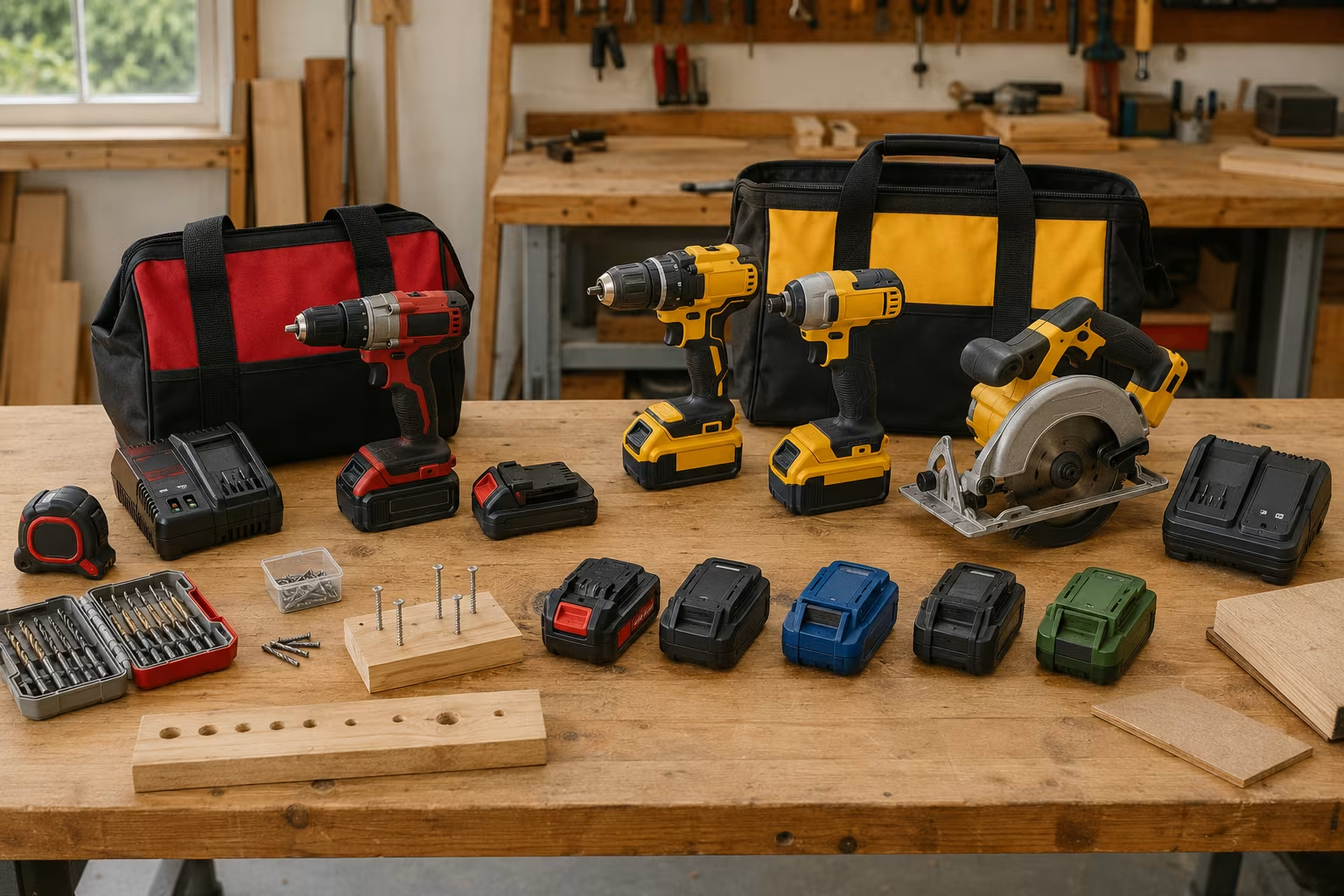
The first cordless purchase usually anchors the choice of platform. Common first purchases:
Drill/driver kit. The most common starter cordless tool. A kit (drill + battery + charger + bag) is more economical than buying the same components separately. Most platforms offer a basic drill kit at an entry price point.
Combo kits. Two or three tools (drill, impact driver, circular saw) plus batteries and charger as a bundle. The bundled price is usually significantly lower than buying individually. Combo kits commit you to the platform but are economical if you know you want several tools.
Battery and bare tool. Once committed to a platform, individual "bare tool" purchases (just the tool, no battery or charger included) make sense for adding tools to the collection. Bare tool pricing is much lower than complete kits.
The trap to avoid: buying a single drill from brand A because it's on sale, then a single circular saw from brand B because it's on sale, then a sander from brand C. Each new brand starts a fresh battery commitment.
When the platform decision is wrong
Sometimes the chosen platform does not work out. The signs:
Tool selection is missing what you need. Not every platform has every tool. If you need a specific specialty tool and your platform does not make it, you either go without or buy into another platform for that one tool.
Battery performance is inadequate. Some platforms (typically budget ones) have shorter battery life or weaker run-time. If your work needs are growing past what the batteries deliver, the platform is limiting.
Tool quality issues accumulate. Failed tools, broken battery packs, recurring problems. A pattern of failures suggests the platform is not built for your use intensity.
Better deals on another platform. Sometimes a competitor offers a tool combo at a significantly lower price than the platform you have committed to. The temptation is real but the long-term cost of switching is usually higher than the short-term savings.
For most users, the original platform serves well. For users who outgrow a budget platform, the migration to a professional platform happens gradually — sell off the old tools, buy the new platform's combo kit, transition the tool set over a year.
Battery generations and compatibility
Within a single platform, batteries evolve. DeWalt 20V MAX has gone through several battery generations (compact, XR, FlexVolt). Ryobi ONE+ has compatibility back to original platform launch in the 1990s.
Backward compatibility. New batteries usually work in old tools (the new battery is more capable than the old tool needs). Old batteries may work in new tools at reduced performance or may not work at all (the new tool needs the data communication features the old battery does not support).
Capacity differences. Within a platform, batteries come in different amp-hour ratings. A 4.0Ah battery delivers twice the runtime of a 2.0Ah battery at the same voltage. Higher capacity batteries are heavier and cost more.
Specialized batteries. Some platforms offer high-output batteries (Milwaukee HD9.0, DeWalt FlexVolt) that deliver more peak power for demanding tools (large saws, large drills). Use these in tools rated for them; standard batteries work fine for most tools.
For most users, the standard 2.0Ah and 4.0Ah batteries in the chosen platform cover most use cases. Specialized batteries earn their place when the work demands them.
Long-term platform investment
Over years of cordless tool ownership, the investment in a single platform grows.
Year one drill kit, maybe a combo kit. Few hundred dollars.
Year three drill, impact driver, circular saw, jigsaw, sander, vacuum. Several batteries. Substantial platform investment.
Year five most major tools in the platform, multiple batteries of different capacities, chargers, accessories. The platform investment exceeds what switching would cost.
At year five and beyond, the lock-in is essentially permanent. Selling off and switching is theoretically possible but the resale value of used tools is much lower than purchase price; the loss on switching is significant.
The implication: the first platform choice deserves real thought. Read reviews, handle tools in person if possible, look at the platform's tool roadmap to see what new tools are being developed. The decision affects the next 5-10 years of your cordless tool experience.
A note on adapters and third-party batteries
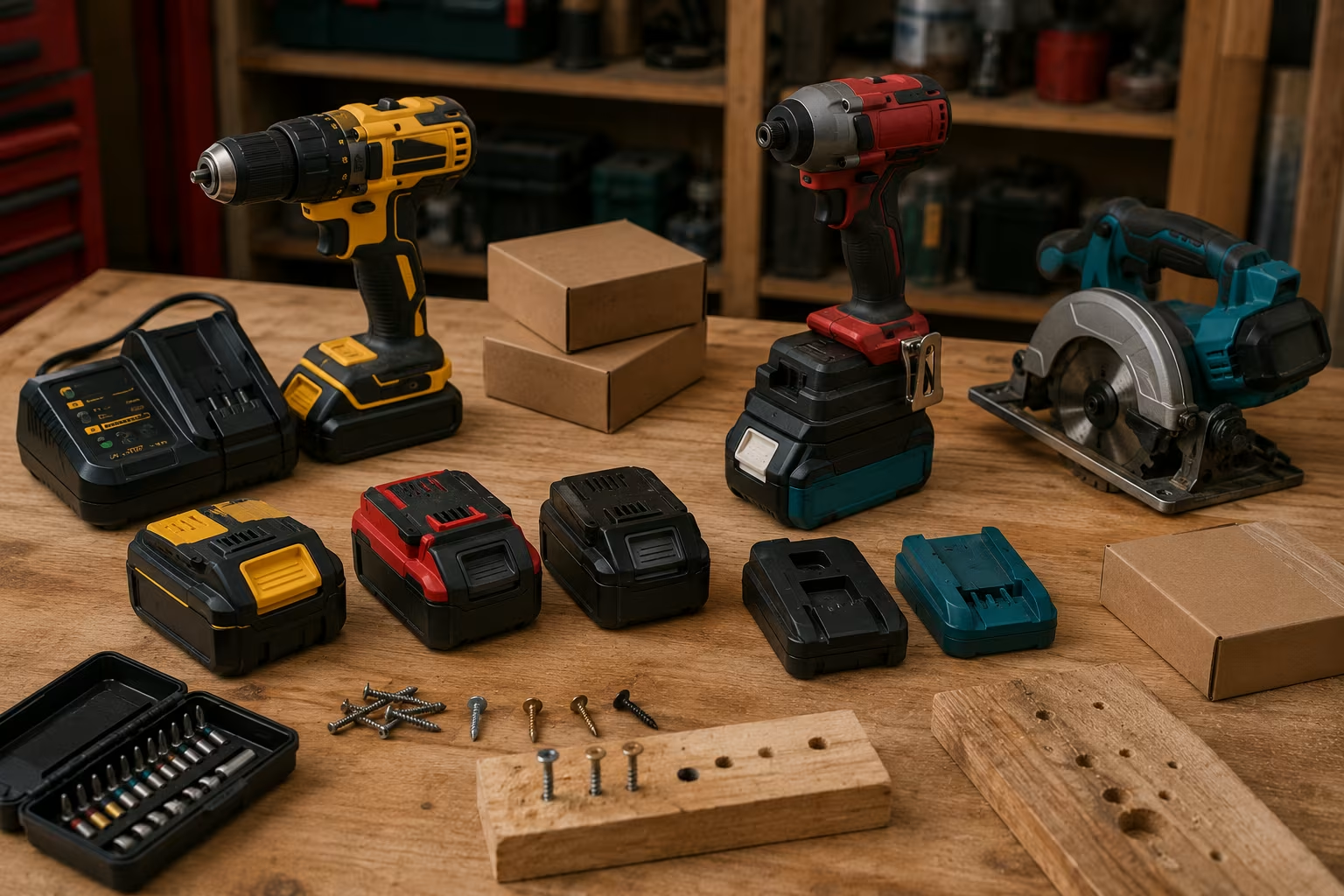
Several companies sell third-party batteries that work in the major platforms at lower prices. Adapter kits also exist to use one brand's batteries in another brand's tools.
Third-party batteries. Quality varies enormously. Some are nearly equivalent to genuine batteries; others fail quickly or have reduced capacity despite the labeled rating. Read reviews carefully and accept that the cost savings come with reliability trade-offs.
Adapter kits. Bulky, may invalidate tool warranty, may not pass all the communication signals the tool expects. Functional but not the cleanest solution. Useful as a stopgap when you have batteries from one brand and a single tool from another brand.
For most users, sticking with genuine batteries from the platform's manufacturer is the right choice. The cost premium is real but pays back in reliability and tool warranty preservation.
When platforms merge or change
The cordless tool market evolves. Platforms occasionally merge, get rebranded, or change capability.
Craftsman switched ownership and reintroduced a battery platform. Older Craftsman batteries do not work with newer Craftsman tools. Owners of the older platform faced a transition decision.
Black & Decker / DeWalt are sister brands but use different battery platforms despite the same parent company. The platforms remain separate.
Some platforms have introduced "flex" or "multivoltage" batteries that work in tools at multiple voltage levels (typically 20V and 60V or similar). DeWalt FlexVolt is the most prominent example.
When buying into a platform, check that the manufacturer is committed to that platform's continuation. Mainstream platforms (DeWalt, Milwaukee, Makita, Bosch, Ryobi) have decades of history and continued investment. Niche platforms or new entrants carry more risk.
A note on second-hand cordless tools
Used cordless tools are a tempting deal but the battery situation requires thought.
A used drill from any platform plus a working battery and charger gives you the same capability as a new bare tool plus battery. The total cost may be lower than buying new.
Used batteries are the riskiest part of the purchase. Lithium-ion battery life depends on age, cycle count, and storage conditions. A used battery may have significant remaining life or may be near failure. Without testing, it is hard to know.
For entering a new platform with used tools, the right approach is to buy used bare tools and new batteries. The bare tools are the durable part; the batteries should be fresh and warrantied.
For expanding within a platform you already own, used tools at significantly reduced prices can build out your tool kit economically.
A note on tool lifespan versus battery lifespan
Cordless tool batteries and the tools they power have different lifespans. Lithium-ion batteries last roughly 3-7 years of regular use before noticeable capacity decline. The tools themselves often last 10-20 years.
The practical implication: over a tool's life, you may go through 2-4 battery generations. Each battery replacement is essentially buying into the platform again. The platform's long-term continuation matters because abandoning a platform mid-tool-life leaves you with working tools and dead batteries.
The major established platforms (DeWalt, Milwaukee, Makita, Ryobi, Bosch) have long histories of continued platform support. Their batteries will likely remain available for years. Niche platforms carry more risk.
Platform facts before you commit:
| Fact | Detail |
|---|---|
| Batteries never cross brands | connectors, electronics and firmware differ by design |
| “20V MAX” = 18V | DeWalt's 20 is peak voltage; M18 is the same 18V nominal |
| The real decision | pick the ecosystem your most-used future tools live in |
| Pro tier | Milwaukee M18 and DeWalt 20V MAX dominate at higher prices |
Related Posts
Caulk Types Compared: Silicone vs Latex vs Hybrid
Caulk choice depends on the joint's water exposure, movement, paintability, and life expectancy....

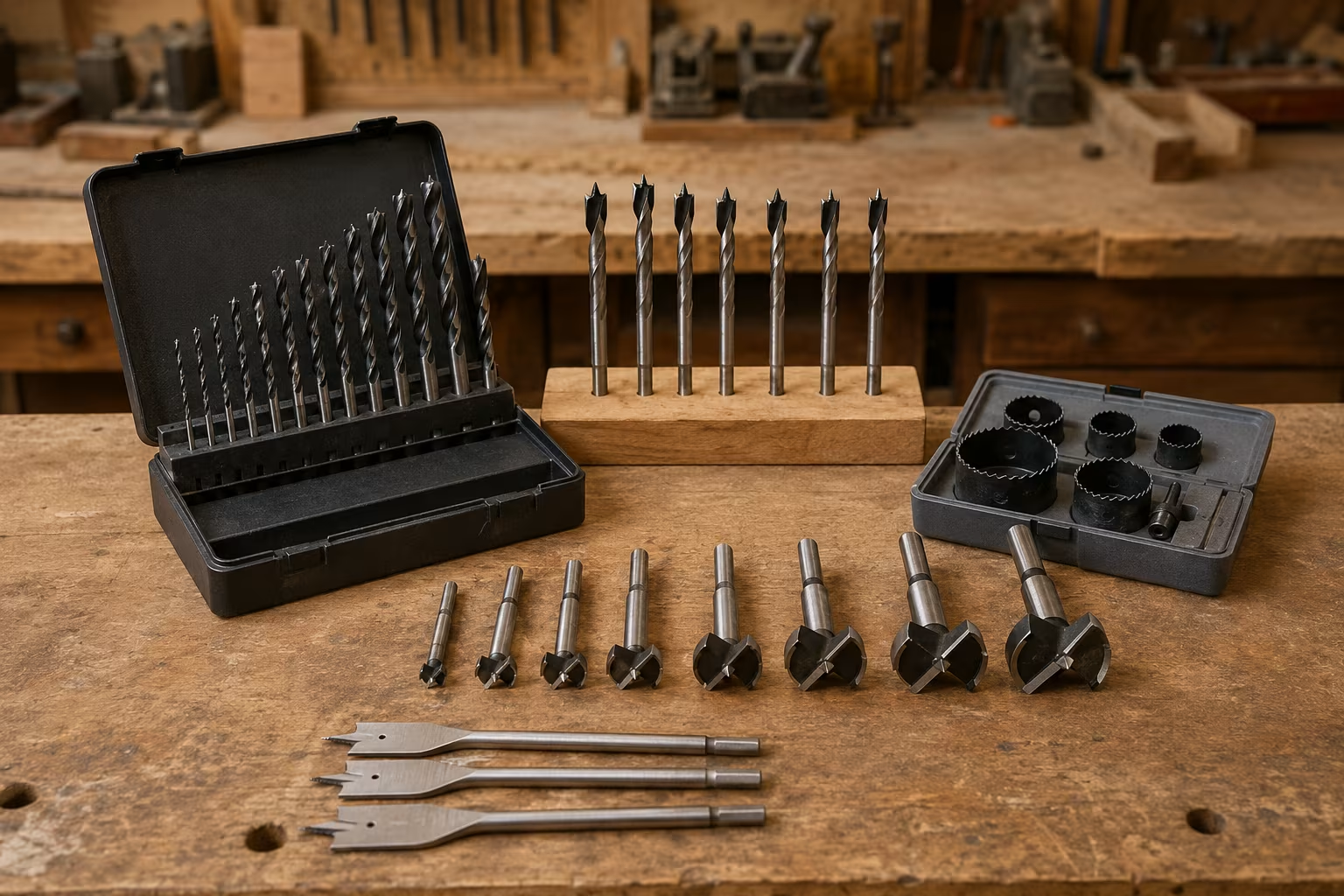
Drill Bit Sets: Twist, Brad-Point, and Forstner Real-Use Map
Most home shops own three drill bits they actually use and twenty they bought once and forgot....
Beginner Cricut Blade Set: What You Actually Use Daily
The Cricut starter blade list is longer than most beginners need. The two or three blades that...
Painter's Tape for Crisp Lines on Textured Wall Surfaces
Standard blue tape bleeds on textured walls. The specialty tapes, caulk-edge-seal step, and...
Comments
No comments yet. Be the first to share your thoughts!