
Backyard Birdhouse Placement for Songbirds
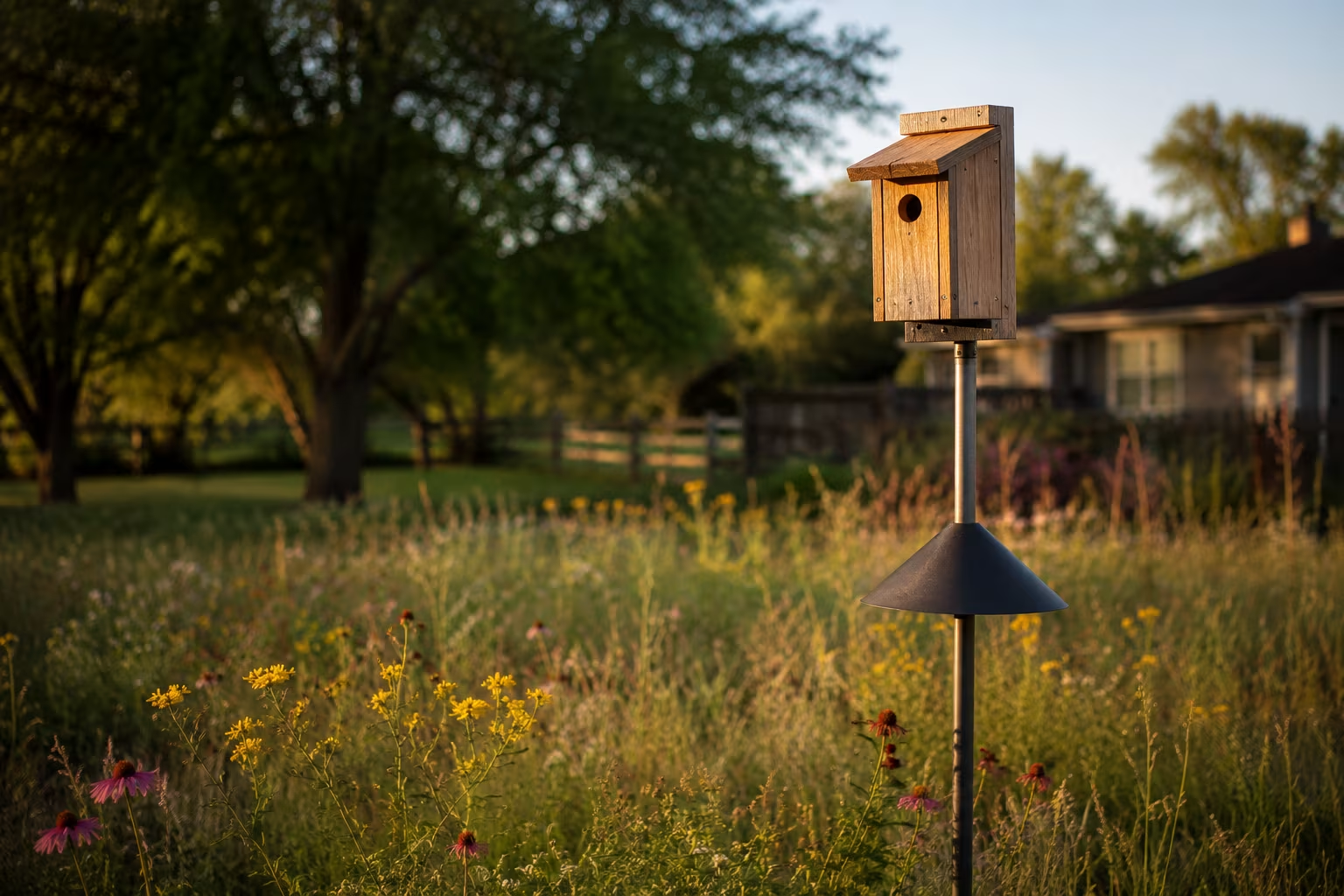
The short answer
A birdhouse occupied by songbirds within a season isn't lucky — it's correctly placed. Standard small songbird birdhouses (chickadees, wrens, bluebirds, swallows) want specific conditions: mounted 5-12 feet high, facing east or north (away from afternoon sun), 50-100 feet from dense cover (so predators can't approach unseen but birds can quickly retreat), and at least 100 feet from other active nest boxes (so territorial males don't fight).
The entrance hole size is the species filter. A 1-1/8 inch hole admits chickadees and house wrens; a 1-1/4 inch hole admits bluebirds; a 1-1/2 inch hole admits tree swallows and house wrens. Predator larger or pest species (house sparrows, starlings) get excluded by the smaller holes.
Most empty birdhouses have a placement problem, not a quality problem. The houses themselves are usually fine; the location is wrong.
Height by species
Chickadees and titmice 5-8 feet up. Wooded edges, near trees.
Bluebirds 4-6 feet up. Open areas, away from dense brush.
House wrens 4-10 feet up. Wooded areas or near hedges.
Tree swallows 4-8 feet up. Near water (ponds, streams), open areas.
Nuthatches 12-20 feet up. Mature trees with rough bark nearby.
Owls and woodpeckers much higher, 20-30 feet. Different design considerations entirely.
The height matters because each species has evolved to nest at certain levels in its natural habitat. A bluebird won't use a box at 20 feet; a nuthatch won't use one at 4 feet.
Direction facing
The entrance hole should face away from the prevailing weather, typically east or north in most of North America.
East-facing morning sun warms the box, no afternoon overheating, generally dry from typical west-to-east weather patterns.
North-facing stays cool through the day. Good in hot regions.
South-facing hot in summer. Eggs and chicks can overheat. Avoid in hot climates.
West-facing receives afternoon sun and prevailing rain. Often the worst direction.
In windy areas, face the entrance away from the prevailing wind direction. A windward-facing entrance lets wind, rain, and snow blow directly into the nest.
Distance from cover and from other boxes
Songbirds want birdhouses with specific spatial relationships to surrounding habitat.
Distance from cover 50-100 feet from dense brush or trees. Close enough that birds can retreat quickly when threatened; far enough that predators can't approach unseen.
Distance from other birdhouses 100+ feet for the same species. Males of cavity-nesting songbirds defend territories around their nests; boxes too close stay empty because the dominant male won't let another male nest nearby.
Distance from bird feeders at least 50 feet. Feeders attract many birds, which attract predators, which threaten nests.
Distance from human activity varies. Some species (bluebirds, swallows) tolerate moderate human activity. Others (some woodpeckers, owls) want isolation.
Predator protection
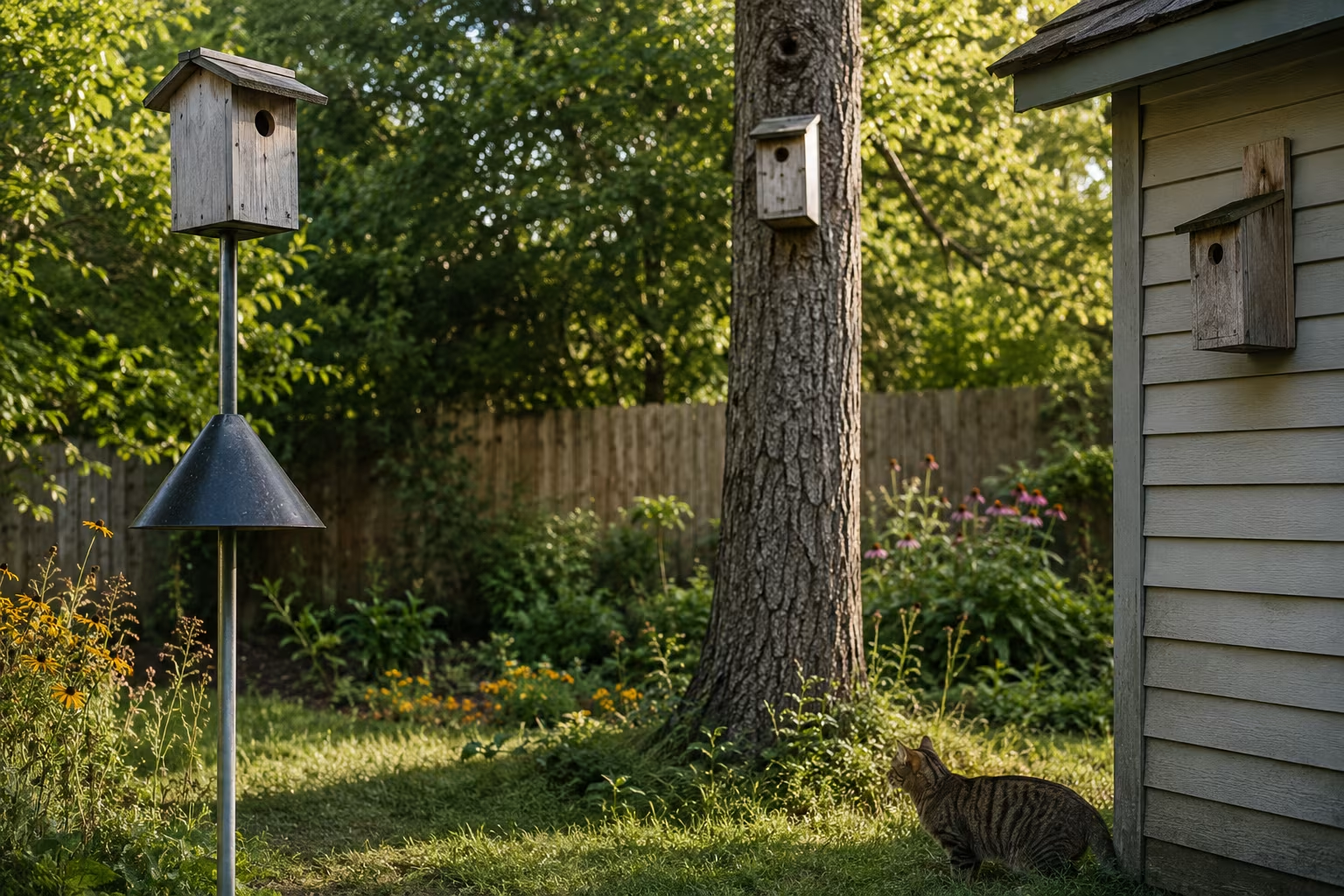
A poorly protected birdhouse becomes a trap. Eggs and chicks attract raccoons, cats, squirrels, and snakes.
Pole-mounted with predator guard a metal baffle or cone on the pole stops most climbing predators. The standard professional setup.
Tree-mounted without protection vulnerable to climbing predators. Avoid unless you can install climbing barriers.
Wall-mounted usually safe from ground predators but accessible to climbing pests.
Roof-mounted usually safe; harder to monitor for cleaning.
Cat danger free-roaming domestic cats are the biggest predator of nestlings. If your yard has cats, predator guards are essential.
Snake danger in many regions, climbing snakes raid bird nests. Pole-mounted with a smooth metal pole or baffle is the strongest protection.
Entrance hole sizes by species
The entrance hole is the key species filter. Holes too large admit predators and pest species; holes too small exclude target species.
1-1/8 inch (28mm) chickadees, titmice, house wrens, brown creepers. The smallest songbird boxes. Excludes house sparrows.
1-1/4 inch (32mm) Eastern bluebird, mountain bluebird, downy woodpecker. The most common bluebird size.
1-3/8 inch (35mm) tree swallow, hairy woodpecker.
1-1/2 inch (38mm) house wren and most songbirds. Also admits house sparrows and starlings, the two main pest species.
1-3/4 inch and larger larger songbirds, woodpeckers, owls. Different design considerations.
For most backyard birding, hole sizes of 1-1/8 and 1-1/4 inch are the safest choices — they admit the species you want and exclude pest species.
Box design beyond placement
The box's internal design matters as well as its placement.
Floor size roughly 4x4 inches inside for small songbirds. Larger species need larger floors.
Depth from entrance to floor 5-8 inches. Too shallow and predators can reach in; too deep and parents struggle to reach nestlings.
Ventilation small holes near the top or under eaves. Critical in hot summer.
Drainage small holes in the floor in case rain enters.
Cleanability removable side panel or hinged top for cleaning between seasons. Birdhouses should be cleaned annually.
No perch outside the entrance a perch helps house sparrows and predators; native songbirds don't need a perch.
Cleaning and maintenance
Birdhouses need annual cleaning to prevent parasites and disease.
Clean in late fall after the breeding season ends, or in early spring before new birds arrive.
Remove old nest material, scrub the interior with mild bleach solution (1 part bleach, 9 parts water), let dry completely.
Inspect for damage, repair as needed. Check the entrance hole for chew damage from predators.
Re-tighten any loose hardware. Wooden boxes weather and screws can loosen.
A neglected birdhouse becomes a disease reservoir. The cleaning takes 10 minutes per box and protects multiple generations of nestlings.
Building vs buying
For backyard birding, the box quality matters less than the placement.
Build your own free plans available from Audubon Society, Cornell Lab of Ornithology, and state wildlife agencies. Specifications match research-tested box designs.
Buy commercial many decorative birdhouses sold at garden centers are poorly designed (wrong entrance size, no drainage, no cleanability). Look for boxes labeled by specific species and following research guidelines.
Premium boxes from companies like Wild Wings, Audubon Park, and individual artisans cost more but follow best practices.
Either approach works. The placement and maintenance matter more than the box brand.
Long-term backyard birding
Birdhouses are one part of a backyard bird habitat. Native plants for cover and food, a clean water source (birdbath), and absence of pesticides all contribute to a productive backyard.
The first year may see no occupants. Birds learn box locations over multiple seasons. Be patient; persistence over years yields results.
Keep records of which species use which boxes. Patterns emerge: some boxes consistently attract chickadees, others bluebirds, others remain empty. Adjust placement or characteristics based on what works in your specific yard.
Bird Species and Birdhouse Specifications
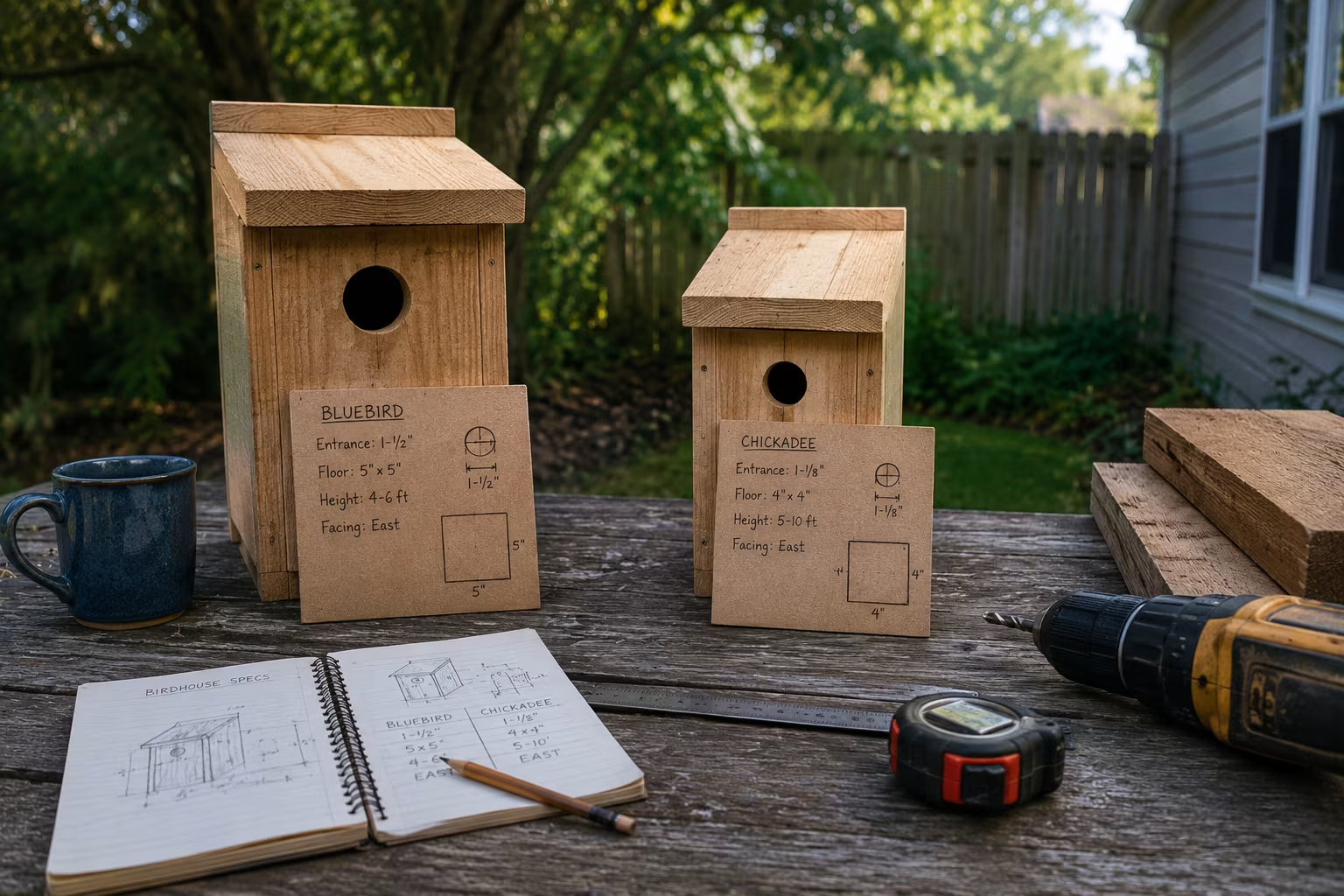
Different bird species require dramatically different birdhouse specifications. North American bluebirds (Eastern Bluebird, Western Bluebird, Mountain Bluebird) need entrance holes of 1-1/2 inches diameter and house floors 5x5 inches. Mounting height: 4-6 feet above ground in open meadow-edge habitat. Best facing direction: east (morning sun warmth, away from prevailing afternoon storms).
Chickadees (Black-capped, Carolina, Mountain) need 1-1/8 inch entrance holes and 4x4 inch floors. Mount 5-10 feet high, preferably in light woodland or yard edges with mature trees nearby. Less specific about direction.
House wrens accept 1-1/4 inch entrance holes and 4x4 inch floors. They're aggressive nesters and will use almost any sheltered location 5-10 feet high, often on poles or fence posts. They can be territorial about other birdhouses nearby.
Purple Martins are unique — they nest in colonies and require multi-compartment houses (gourds or apartment-style structures) 15-20 feet high in completely open fields away from trees. The species declined dramatically in the 20th century and is now almost entirely dependent on human-provided nest sites.
Woodpeckers (Downy, Hairy, Red-bellied) need much deeper cavities (12-18 inches floor to entrance) with floors 5-8 inches square. Entrance hole 1-1/2 to 2 inches depending on species. Mount 10-20 feet high on mature trees or dedicated posts.
Owls (Eastern Screech, Northern Saw-whet, Barn) need very large boxes (10-12 inch floors, 18-24 inches deep) mounted 12-30 feet high in mature woodland.
Mismatched specifications result in unused birdhouses or worse, predator access. A bluebird house with 2-inch entrance allows raccoons, squirrels, and starlings to evict the desired species.
Predator Protection Strategies
Birdhouse placement requires active predator management. Snakes, raccoons, cats, and squirrels all raid bird nests opportunistically. Without protective measures, most natural cavity nests fail.
Pole-mounted houses with predator baffles outperform tree-mounted houses dramatically. A standard metal stovepipe baffle (8 inches diameter, mounted 4 feet above ground beneath the birdhouse) blocks climbing predators effectively. Brands like Audubon Workshop Squirrel Baffle, Erva PB1 Pole Baffle, or DIY versions from sheet metal cost 15-40 USD per baffle (as of 2026 — confirm current pricing).
Predator guards around entrance holes prevent raccoons from reaching inside. A simple wood block (1-1/2 inches thick) drilled with the correct entrance hole and attached over the birdhouse opening extends the depth such that raccoon arms can't reach the nest. Total cost: under 5 USD per guard.
Tree-mounted houses face higher predation rates because climbing animals have many access routes. If trees are the only option, choose isolated trees away from other structures, prune low branches that provide launching points, and consider plastic conduit baffles wrapped around the tree trunk below the house.
Cats present the most significant urban threat to backyard birds. Keep cats indoors when possible; outdoor cats kill an estimated 2.4 billion birds annually in North America (American Bird Conservancy data). If outdoor cats are unavoidable, locate birdhouses near dense thorny shrubs (rose, hawthorn) where small birds can escape but cats can't easily pursue.
Maintenance Schedule and Nesting Cycles
Birdhouses require annual maintenance to remain attractive and safe. Late winter (February-March in temperate climates) is the ideal time to clean houses before nesting season begins.
Cleaning procedure: open the side or bottom panel, remove old nesting material completely, brush out debris with a stiff brush, spray inside with weak bleach solution (1:10 ratio with water), allow to dry completely in sun, reinstall cleaning panel. This eliminates parasites (mites, blowfly larvae) that accumulate in old nests.
Mid-season cleaning between broods is debated among birders. Some species (bluebirds, swallows) raise multiple broods per season and benefit from cleaning between nests; others (chickadees, wrens) reuse the same nest. Researching the local species before cleaning prevents accidentally evicting active nests.
Nesting season varies by region and species. Eastern Bluebirds in Virginia begin scouting in late February; first eggs typically by late March. Tree Swallows begin a few weeks later. Multiple broods extend the season into July-August. Avoiding human disturbance during active nesting (don't bang on the house, don't visit the house in groups) reduces nest abandonment.
Building vs Buying Birdhouses
Commercial birdhouses range widely in quality and species suitability. NestBox Builder, Coveside Conservation, and Audubon-approved manufacturers produce species-specific houses tested for durability and effectiveness. Prices range 25-80 USD per house. Quality indicators: untreated cedar or pine construction, no perches outside entrance (perches help predators), recessed roof overhang (3+ inches), ventilation slots near top, drainage holes in floor, hinged cleanout panel.
Cheap decorative birdhouses sold at garden centers and big box stores often fail one or more critical criteria. Painted exteriors with bright colors can attract predators; perches make access easier for raccoons and snakes; lack of drainage causes nest flooding; sealed designs prevent cleaning.
Building a birdhouse from scratch is a satisfying weekend project. Plans for species-specific houses are freely available from the Cornell Lab of Ornithology, Audubon Society, and NestWatch. Material cost for a basic cedar bluebird house: 15-30 USD. Building time: 2-4 hours for a beginner.
Monitoring and Documentation
Cornell Lab's NestWatch program enables citizen science participation. Volunteers monitor active nests, recording species, egg counts, hatching dates, and fledging success. Data contributes to long-term research on bird population trends. Over 30,000 people participate annually in North America.
Smartphone apps like Merlin Bird ID (free), eBird, and BirdNET help identify species visiting your yard. Trail cameras (Stealth Cam G42, Browning Spec Ops Edge — 80-200 USD) can capture nest activity without disturbing birds, providing intimate views of nesting behavior.
Attracting nesting birds to your yard requires matching species-specific specifications, thoughtful placement, predator protection, and consistent maintenance. The reward — watching a family of bluebirds raise broods within view of your kitchen window — is one of backyard wildlife's most enduring pleasures. Years of stewardship cumulate into a backyard ecosystem that benefits both birds and observers. This investment of attention pays dividends through every spring season.
Related Posts
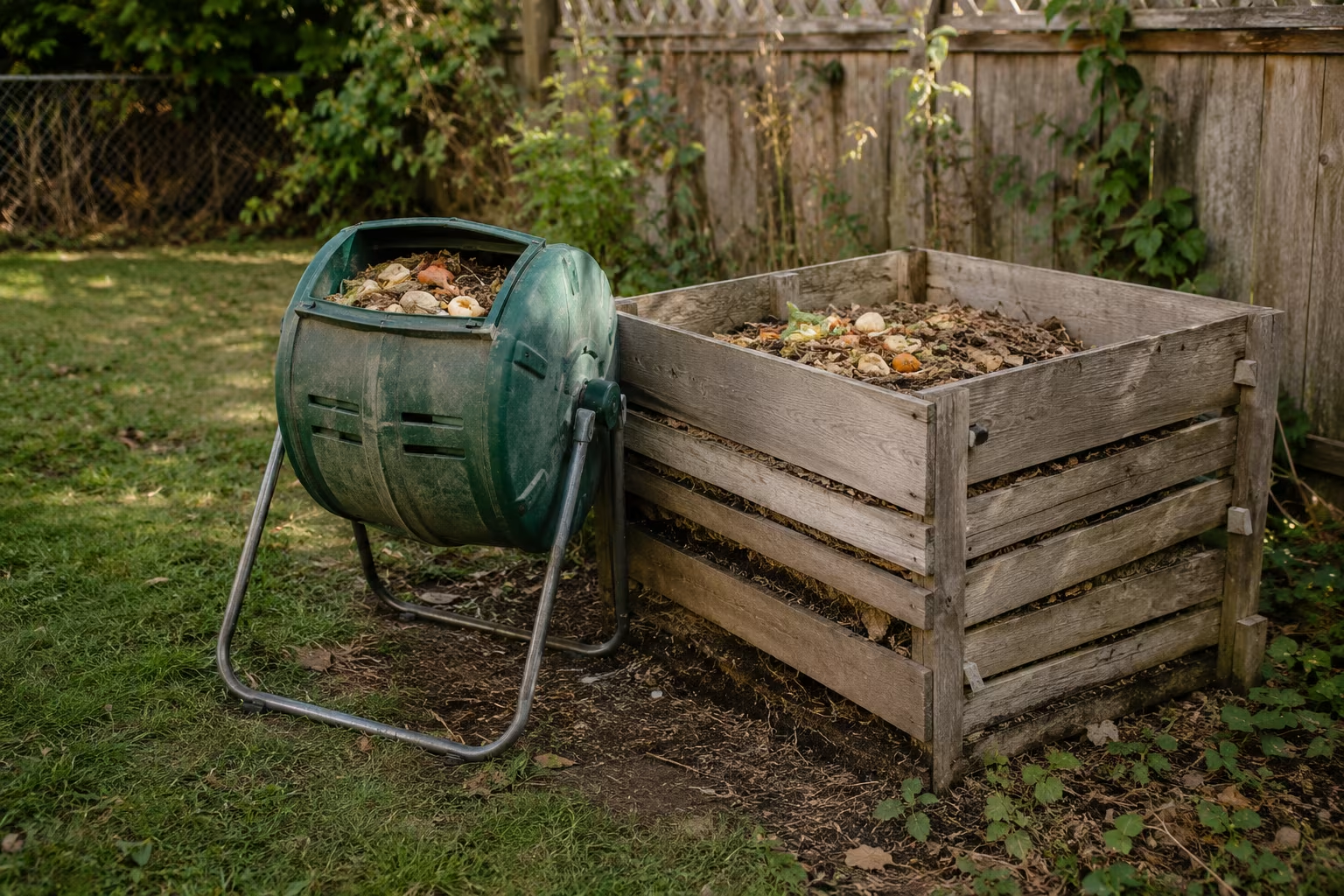
Compost Tumbler vs Static Bin: Which to Choose
Both composters work but they suit different households. Tumbler for speed and pest control...

Wet-Climate Tent Camping: The Layering That Stays Dry
Three-season tents in wet climates fail predictably without the right layering. The footprint...
Small-Yard Composting Without Smell or Pests Attracting
Tight backyard, no room for a sprawling pile. The tumbler setup that turns kitchen scraps into...
Hammock Anchor Choice: Tree Straps, Posts, or Stands
Tree straps are flexible but need trees. Posts need installation. Stands are portable but heavy....
Comments
No comments yet. Be the first to share your thoughts!