
The Best Lighting Combinations for a Perfectly Balanced Living Room
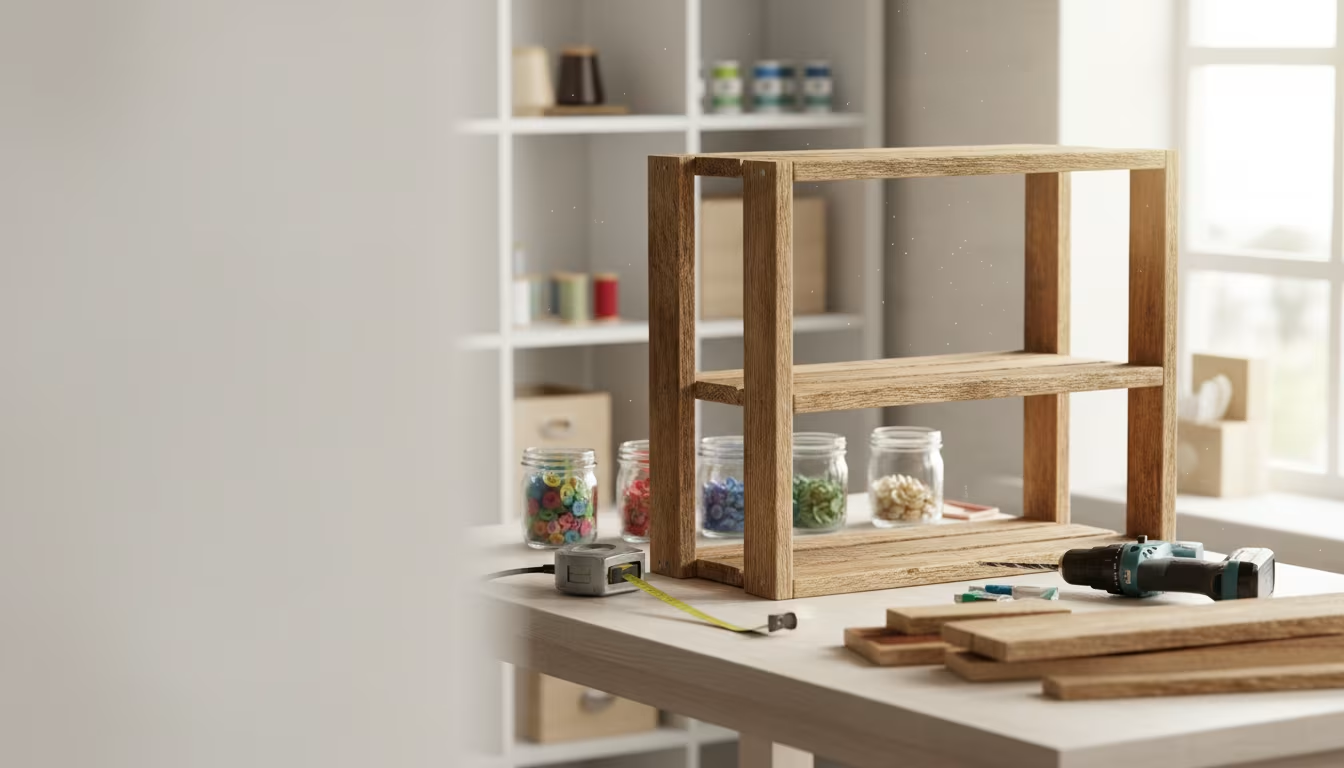
A living room that feels either harsh and over-bright or too dim to read in usually has the same problem: a single light source doing every job. The fix is layering, combining three kinds of light so the room can shift from bright and functional to soft and cozy. This guide explains the three layers, how to map them to what you actually do in the room, and the bulb and dimmer choices that pull it all together, most of it achievable with thrift-store lamps and better bulbs.
Why layered lighting matters
Lighting sets comfort and mood as much as it lets you see. A room lit by one overhead fixture reads flat and cold, with harsh shadows and no sense of depth, no matter how many fairy lights you add. Combining several intentional light sources at different heights is what makes a space feel warm and welcoming, whether you are reading late or watching a film. The good news is that it costs little; smart bulb choices and clever placement matter far more than expensive fixtures.
The three layers: ambient, task, and accent
Every balanced room uses three types of light working together, each with a distinct job.
Ambient lighting is the room's general glow, the baseline brightness that fills the space and keeps you from bumping into furniture. It comes from overhead fixtures, recessed cans, or large floor and table lamps, and the goal is even, comfortable illumination without harsh shadows.
Task lighting is focused light for specific activities: reading, knitting, working a puzzle, or writing a list. It should land exactly where you need it to prevent eye strain, from a reading lamp beside an armchair, a desk lamp, or under-shelf lighting for precise work.
Accent lighting adds drama and depth. It highlights things you want to showcase, a piece of art, a shelf of finds, or a houseplant, using picture lights, small spotlights, or uplights. A few well-placed accents make a room feel curated and intentional. Combine all three and you stop flipping one switch and start shaping the atmosphere.
Map your zones and activities
Before buying a single lamp, sketch the room, even roughly, and mark what you actually do in each area. Do you read on the couch, watch TV, play board games at the coffee table, or run a small craft corner? Marking these zones shows you where each type of light belongs and stops you buying fixtures you do not need. If you have an activity spot like a coffee-table workspace, note it now; a piece with its own surface, such as an epoxy river tray on the coffee table, benefits from its own nearby task light.
Build the ambient foundation
Start with general illumination. If you have an overhead fixture, notice what kind of light it throws and whether it is enough. If it is weak or missing, a tall floor lamp with a diffused shade fills a room softly, and a couple of table lamps on consoles or end tables add to the ambient level without a ceiling fixture. The aim is to erase dark corners and give a soft, even brightness you can move around in comfortably. Layering light this way also works with the room's scale; used together with open sightlines it can make a space feel bigger, an idea covered in our guide to using negative space to make a living room feel larger.
Add task and accent lighting where they count
Return to the zones you mapped. Every reading chair needs a dedicated task lamp, either an adjustable floor lamp or a sturdy table lamp, positioned so the light falls on the page and not in your eyes; for reading, that usually means from beside or slightly behind you. Then layer in accents on the features worth highlighting. Puck lights or LED strips fit inside shelves, a small floor spotlight can uplight a plant in a corner, and picture lights suit wall art. Restraint is the rule here: a few placed lights make a stronger impression than a dozen scattered ones, and the point is depth and focal points, not brightness.
Get bulb temperature and dimmers right
Bulb color temperature, measured in Kelvin, decides whether a light looks warm and yellowish or cool and blue. For a cozy living room, aim for warm bulbs around 2700K to 3000K, close to the glow of an old incandescent. Cooler temperatures of 3500K to 5000K and up suit task-heavy spaces like kitchens and workshops, but they feel clinical in a room meant for relaxing, so keep the living room warm. Just as important, avoid mixing wildly different temperatures in the same room, which reads as jarring and unbalanced. For the science behind the Kelvin scale, see the overview of color temperature on Wikipedia.
Dimmers add the flexibility that makes layering worthwhile, letting you move from bright crafting light to a soft movie glow with one dial. They are straightforward to install if you are comfortable with basic wiring, or a pro can do it. Smart plugs are the no-wiring alternative for lamps that are not on dimmers: they switch on a schedule or by phone or voice, and they work well on thrifted lamps you do not want to rewire.
Test, live with it, and adjust
Layered lighting is not a one-and-done setup. After the initial arrangement, live with it for a few days to a week and notice how the room feels at different times and for different activities. Are there still dark spots? Is one area too bright? Move lamps, swap bulbs for different temperatures or wattages, or add a small source. A good living-room scheme often lands on three to five separate light sources for a mid-sized room, fewer for a small one and more for a large one, so treat that as a target while you fine-tune. Mixing fixture heights and styles helps too; a modern floor lamp beside a vintage ceramic table lamp adds character, and a sheer shade spreads soft ambient light while a metal shade directs a tighter task beam.
Common mistakes to avoid
A few traps undo otherwise good intentions:
- Relying on one overhead light: a lone flush-mount casts flat, unflattering light and harsh shadows. Add lower sources to break it up.
- Skipping dimmers: without them the room is stuck at one brightness that rarely fits every situation.
- Ignoring bulb temperature: grabbing whatever is cheapest and mixing warm and cool bulbs makes a room feel disjointed.
- Wrong fixture scale: a tiny lamp on a large table looks lost, and an oversized one overpowers a small corner. Match the lamp to its surface.
- Too many weak decorative lamps: lots of little lights that give no useful illumination just add clutter without solving the lighting.
Natural light belongs in the plan as well. During the day it sets the foundation, so keep windows clear, use light window treatments, and place mirrors to bounce daylight deeper into the room; our piece on mirror placement and natural light goes further on that. One more number worth knowing: with LEDs, brightness is measured in lumens, not watts. A traditional 60-watt incandescent puts out roughly 800 lumens, so read the lumen figure on the package to judge how bright a bulb will be. As a loose guide, ambient sources can run brighter while a bedside or reading task lamp often feels best around 400 to 800 lumens, and a warm accent light can be dimmer still, since its job is atmosphere rather than visibility.
You do not need to overhaul everything at once. Swap a harsh bulb for a warm one, add a single floor lamp beside the couch, or move an existing lamp to a darker corner, and check thrift stores for lamp bases you can rewire or reshade for under $20. Build the room one layer at a time and judge each change by how the space feels to sit in.
Bulb numbers for a balanced room:
| Metric | Value | Note |
|---|---|---|
| Living areas | 2700–3000K | the old-incandescent glow |
| Task spaces | 3500–5000K | clinical in a living room |
| Brightness reference | 60W incandescent ≈ 800 lumens | judge by lumens, not watts |
| Reading lamp | 400–800 lumens | ambient sources can run brighter |
Related Posts
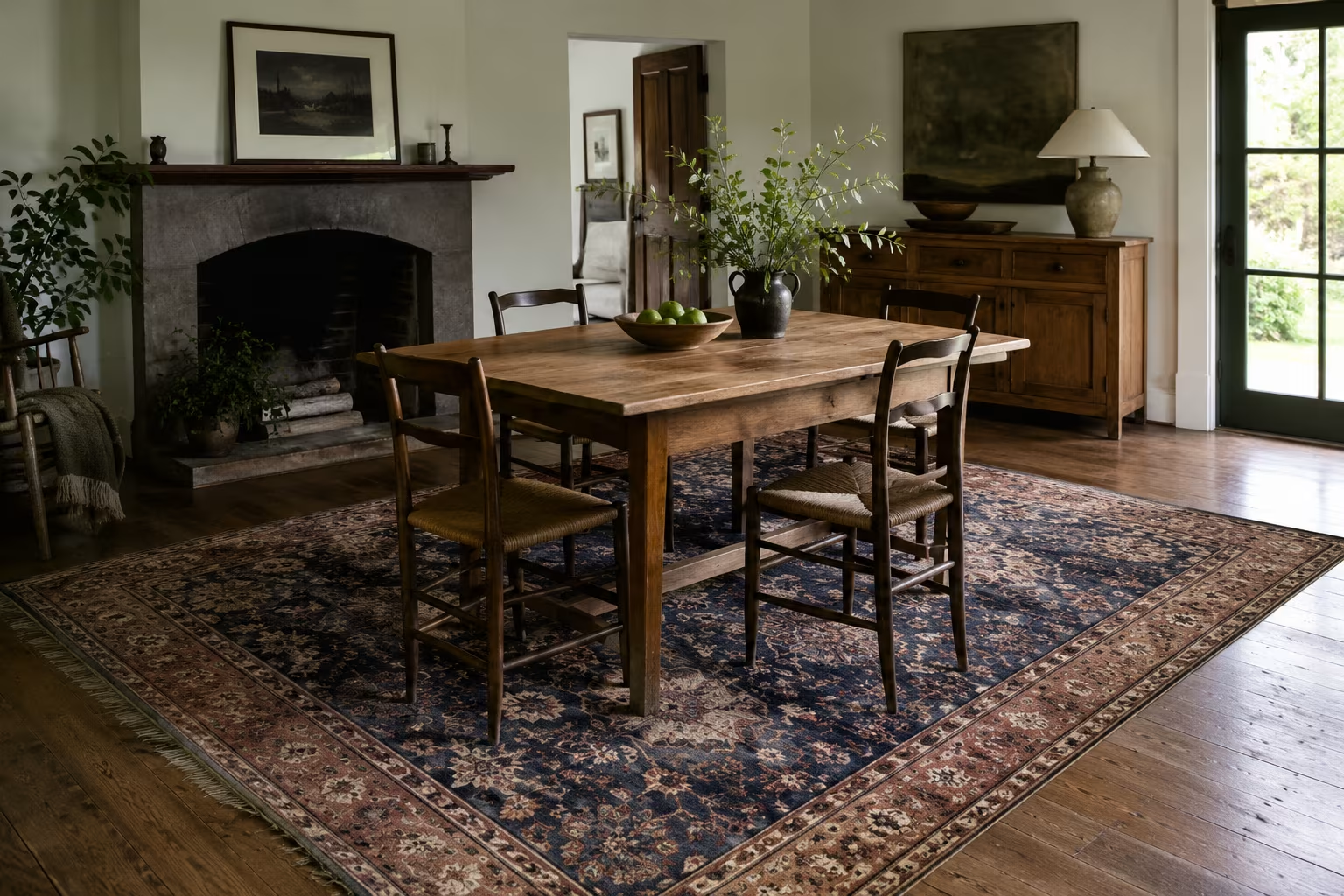
Area Rug Size Under Dining Table
A rug too small under dining table looks like a mistake. Chairs must stay on rug when pulled out.

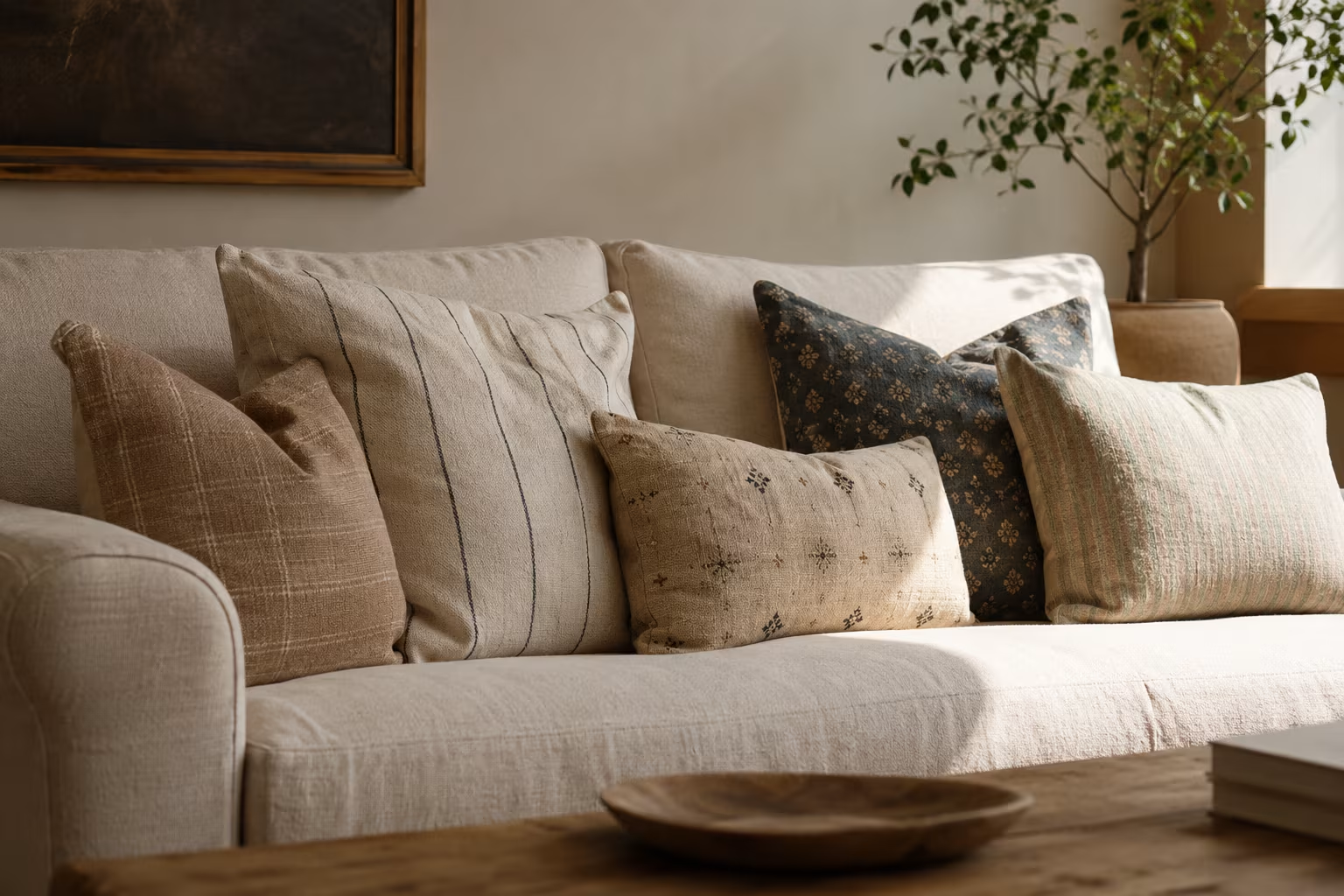
Sofa Pillow Combinations That Don't Fight
Throw pillows pile up over years. Rules for color, texture, pattern, and size.
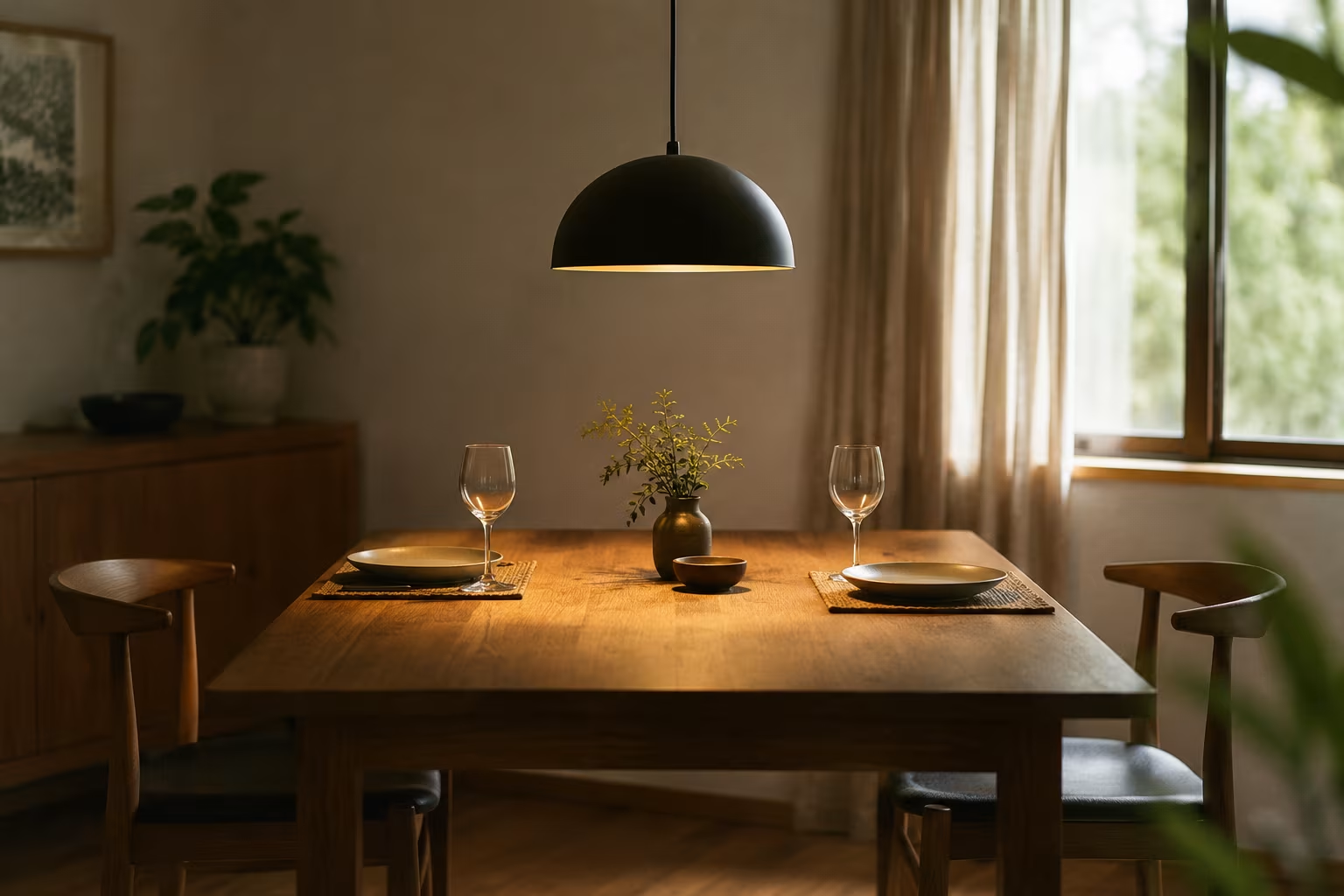
Light Fixture Height Over Dining Table: The Rule
The right pendant light height over a dining table is calculated, not guessed. The standard...
Hanging Plants Without Ceiling Hooks for Renters
Hanging plants brighten any room but drilling into the ceiling isn't always an option....
Comments
No comments yet. Be the first to share your thoughts!