How to Build a Bat House That Actually Attracts Mosquito-Eating Bats
Oh, summer evenings! I love everything about them – the longer daylight, the smell of grilling, catching up with friends on the patio. Everything, that is, until the mosquitoes show up. You know that feeling, right? One minute you’re laughing, the next you’re doing the frantic arm-flail dance to ward off those buzzing bloodsuckers.
For years, I tried all the usual tricks: citronella candles, sprays that smell like bug killer and regret, even those weird ultrasonic things. Nothing really worked, and honestly, I didn't love all those chemicals around my garden. That’s when I started looking into a more natural solution, and that's how I ended up building my first bat house. 👋
Today, I want to walk you through exactly how to build a bat house that actually works. We’ll cover what makes a good bat home, a step-by-step guide to assembling your own, and how to pick the perfect spot so those little bug-eaters actually move in. Get ready for quieter, less itchy evenings!
Why This Actually Matters
Okay, let’s be real for a second. The idea of bats might give some people the creeps, but these little guys are seriously misunderstood. They’re not looking to get in your hair; they're looking for dinner, and their favorite dish happens to be mosquitoes and other night-flying insects.
Think about it: a single bat can eat thousands of insects in one night. That's a lot of mosquitoes not biting you! I built my first bat house about two years ago, mostly out of desperation after a particularly swampy June. Honestly, I was skeptical, but within a few months of it being up, I noticed a significant drop in mosquito activity in my backyard. It was a game-changer for enjoying my outdoor space without getting eaten alive.
Beyond personal comfort, bats play a super important role in our ecosystems. Many bat species are facing habitat loss, so by providing a safe, warm roosting spot, you're also doing a really great thing for local wildlife. It’s a win-win: fewer mosquitoes for you, and a safe home for some amazing nocturnal creatures. Plus, it's way more satisfying than lighting another stinky candle.
What Makes a Bat House a Bat Home?
You might think a bat house is just a simple box, but bats are actually pretty particular about where they live. It’s not just about having a roof over their heads; they need specific conditions to feel safe and raise their young. If you want bats to move in, you’ve got to make it appealing to them!
It’s kind of like trying to find the perfect apartment. You want good climate control, a secure feeling, and maybe some good "schools" (aka, bug hunting grounds) nearby. Bats are looking for something similar in their ideal roost.
The Three Must-Haves for Happy Bats
When you're designing or choosing a bat house, there are a few non-negotiables that will make it much more attractive to a colony. Skimp on these, and your house might just sit empty, no matter how cute it looks.
- Warmth is Key: Bats, especially mother bats raising pups, need a warm, stable environment. Bat houses should be designed to absorb and retain heat. That usually means a dark color and specific materials that don't get too drafty. This consistent warmth helps their young grow quickly.
- Rough Surfaces for Clinging: Bats don't nest like birds; they cling! The interior surfaces of the bat house need to be rough enough for them to get a good grip. Smooth, finished wood just won't cut it. You'll need grooves, scratches, or even a special mesh on the inside.
- Safety from Predators: A bat house needs to protect its occupants from things like raccoons, owls, and even house cats. This means a proper entrance slot, and placement high up and away from easy climbing access. You don't want to accidentally create a predator's buffet.
How To Actually Do It: Building Your Bat Batchelor Pad
Alright, now for the fun part: actually building this thing! Don't let the idea of woodworking intimidate you. My first woodworking project was a disaster, a wobbly bookshelf that leaned precariously. But every project, even a simple bat house, teaches you something new. We're going for functional, not necessarily fine art here.
You don't need a huge workshop or a ton of fancy tools. A few basic power tools or even good hand tools will get the job done. This particular design is a single-chamber bat house, which is perfect for beginners and can host a decent-sized colony.
Step 1: Gather Your Materials & Tools
Before you make any cuts, it’s always best to get everything organized. There’s nothing worse than being halfway through a project and realizing you're missing a crucial screw. Trust me, I’ve done it more times than I care to admit!
Head to your local hardware store. Sometimes you can even find suitable wood scraps at thrift stores or on a local buy-nothing group. Just make sure it's untreated and sturdy.
Materials You'll Need:
- 1/2-inch or 5/8-inch Exterior Grade Plywood: You'll need about a 2x4 foot section. Look for CDX or similar; it's designed for outdoor use and usually has one rougher side.
- 1x2 Lumber (actual dimensions are usually 0.75" x 1.5"): You'll need about 6 linear feet for internal spacers.
- 1 1/2-inch to 2-inch Galvanized or Exterior-Grade Screws: About 30-40 of them. Galvanized screws resist rust, which is important for outdoor projects.
- Exterior-Grade Caulk (Non-toxic, Paintable): A tube or two to seal up any gaps and drafts.
- Dark, Water-Based Exterior Paint or Stain: Black or a dark brown is best for heat absorption.
- Optional for extra grip: Polypropylene plastic mesh or hardware cloth (1/8-inch size) that bats can cling to. Some folks also just use a sharp tool to score grooves directly into the wood.
Tools You'll Need:
- Miter Saw or Circular Saw: For cutting your wood panels accurately. A hand saw can work, but it will take more effort.
- Drill/Driver: For pre-drilling holes and driving screws.
- Tape Measure & Pencil: Essential for accurate measurements.
- Sandpaper or Sanding Block: For smoothing rough edges (but not the interior clinging surfaces!).
- Safety Glasses: Always, always wear these when cutting or drilling.
- Caulk Gun: If using caulk in a tube.
- Paint Brush or Roller: For painting.
Step 2: Measure & Cut Your Plywood Pieces
This is where precision really pays off. Measure twice, cut once – it's an old saying for a reason! Lay out all your cuts on the plywood before you start cutting to minimize waste. I like to draw everything out with a pencil first.
When you're cutting, support your plywood properly so it doesn't sag or splinter. Using a straight edge guide with your circular saw can help keep your cuts perfectly straight, which makes assembly much easier. If you're new to this, maybe practice on a scrap piece first!
Plywood Cut List (from 1/2" or 5/8" plywood):
- Back Panel: One piece, 24 inches high x 16 inches wide. This will be the main back of your bat house and the surface you mount it to.
- Front Panel: One piece, 18 inches high x 16 inches wide. This panel is shorter than the back to create the entrance slot for the bats.
- Roof Panel: One piece, 18 inches wide x 6 inches deep. This will overhang the front, back, and sides to help protect the house from rain.
- Landing Strip: One piece, 16 inches wide x 6 inches high. This piece provides a rough surface for bats to land on before crawling into the house.
1x2 Lumber Cut List (actual dimensions approx. 0.75" x 1.5"):
- Side Spacers: Two pieces, 24 inches long. These will run vertically along the sides of the back panel, creating the depth of your bat chamber.
- Top Spacer: One piece, 14.5 inches long. This piece fits horizontally between the two side spacers at the top, closing off the chamber. (16" overall width - 2 0.75" spacer thickness = 14.5").
- Interior Cleat for Landing Strip: One piece, 14.5 inches long. This will support the landing strip internally.
Step 3: Roughen the Interior Surfaces
Remember how bats need to cling? This is where we make sure they can. Take your back panel and your front panel and roughen up one side of each.
You can do this by scoring the wood with a utility knife, chisel, or even a sharp screw. Aim for horizontal grooves about 1/16 to 1/8 inch deep and spaced about 1/2 inch apart. This creates tiny ladders for the bats. Alternatively, you can staple a piece of polypropylene plastic mesh (often found in garden centers) or hardware cloth to the inside surface of both panels. Just make sure the mesh is durable and won't snag. I actually forgot this step on my first bat house and had to pry it apart to add the grooves later – definitely do it now!
Step 4: Assemble the Back Chamber
Now we start putting it all together! Take your back panel (the 24"x16" one, with the roughened side facing in) and your two 24-inch side spacers. Lay the back panel flat, roughened side up.
Place one side spacer along each 24-inch edge of the back panel. The 0.75-inch side of the 1x2 should be against the back panel, creating a 0.75-inch deep chamber. Pre-drill pilot holes through the back panel into the spacers, then secure them with your exterior screws, about every 6-8 inches. Make sure they're flush.
Next, fit the 14.5-inch top spacer between the two side spacers, at the very top. This will complete the three sides of your internal frame. Screw this piece into place from the back panel. Double-check that your chamber width is consistent – about 0.75 inches is ideal for most bat species.
Step 5: Attach the Front Panel
With your internal frame securely attached to the back panel, it's time to add the front. Take your 18"x16" front panel (roughened side facing in, towards the chamber). Center it on the internal spacers. You'll notice there's a 6-inch gap at the bottom – this is the bat entrance!
Pre-drill and screw the front panel to the side and top spacers. Ensure it's straight and secure. This forms your main bat roosting chamber. Don't go too crazy with the screws, but make sure it feels sturdy. Any gaps here can lead to drafts, which bats don't like.
Step 6: Build the Landing Strip & Attach Roof
First, let's get that landing strip on. Take your 14.5-inch interior cleat (from the 1x2 lumber) and screw it horizontally to the bottom edge of the back panel, on the outside*. This will provide a solid anchor for your plywood landing strip.
Now, take your 16"x6" plywood landing strip. Position it so it covers the 6-inch gap at the bottom of the bat house, resting on the interior cleat you just installed. It should extend downwards from the front panel. Screw it securely into the interior cleat and also into the bottom edge of the side spacers.
Finally, for the roof: Center your 18"x6" roof panel on top of the bat house. It should overhang the front, back, and sides. This overhang is super important for diverting rain away from the entrance and walls. Pre-drill and screw the roof into the top edge of the back panel, front panel, and side spacers. I like to add extra screws where the roof meets the back panel for mounting stability later on.
Step 7: Caulk All Seams & Paint It Dark
You’re almost there! Now it’s time to make your bat house weatherproof and warm. Grab your exterior caulk and a caulk gun.
Go around every exterior seam and gap – where the roof meets the walls, where the landing strip meets the main box, and any small openings between the plywood panels. Apply a generous bead of caulk and smooth it with your finger for a good seal. This prevents drafts, keeps out unwanted insects, and seals against moisture. Bats really need a draft-free environment to regulate their body temperature, especially the little pups.
Once the caulk is dry (check the caulk instructions for drying time), it’s time to paint. Use your dark, water-based exterior paint. Black or a very dark brown is best because it absorbs sunlight and keeps the interior warm. Apply at least two coats, letting each coat dry thoroughly. Make sure you paint the entire exterior, including the underside of the roof overhang and the landing strip.
Important: Do NOT paint the interior of the bat house or the roughened surfaces! We want those unsealed and rough for the bats to cling to. Also, avoid oil-based paints, primers, or wood preservatives with strong fumes, as these can be toxic or repellent to bats. Stick to water-based exterior paints.
Making It Stick / Common Mistakes: Getting Bats to Move In (and Stay!)
You’ve built a fantastic bat house, now what? It's easy to think the hard part is over, but getting bats to actually move in can take some patience and the right placement. My first bat house sat empty for almost a year and a half, and I almost gave up! But then, one evening, I saw them. It was truly rewarding.
Here are some of the most common mistakes people make and how you can avoid them, so your bat house becomes a buzzing bat nursery.
Mistake 1: Wrong Location, Wrong Orientation
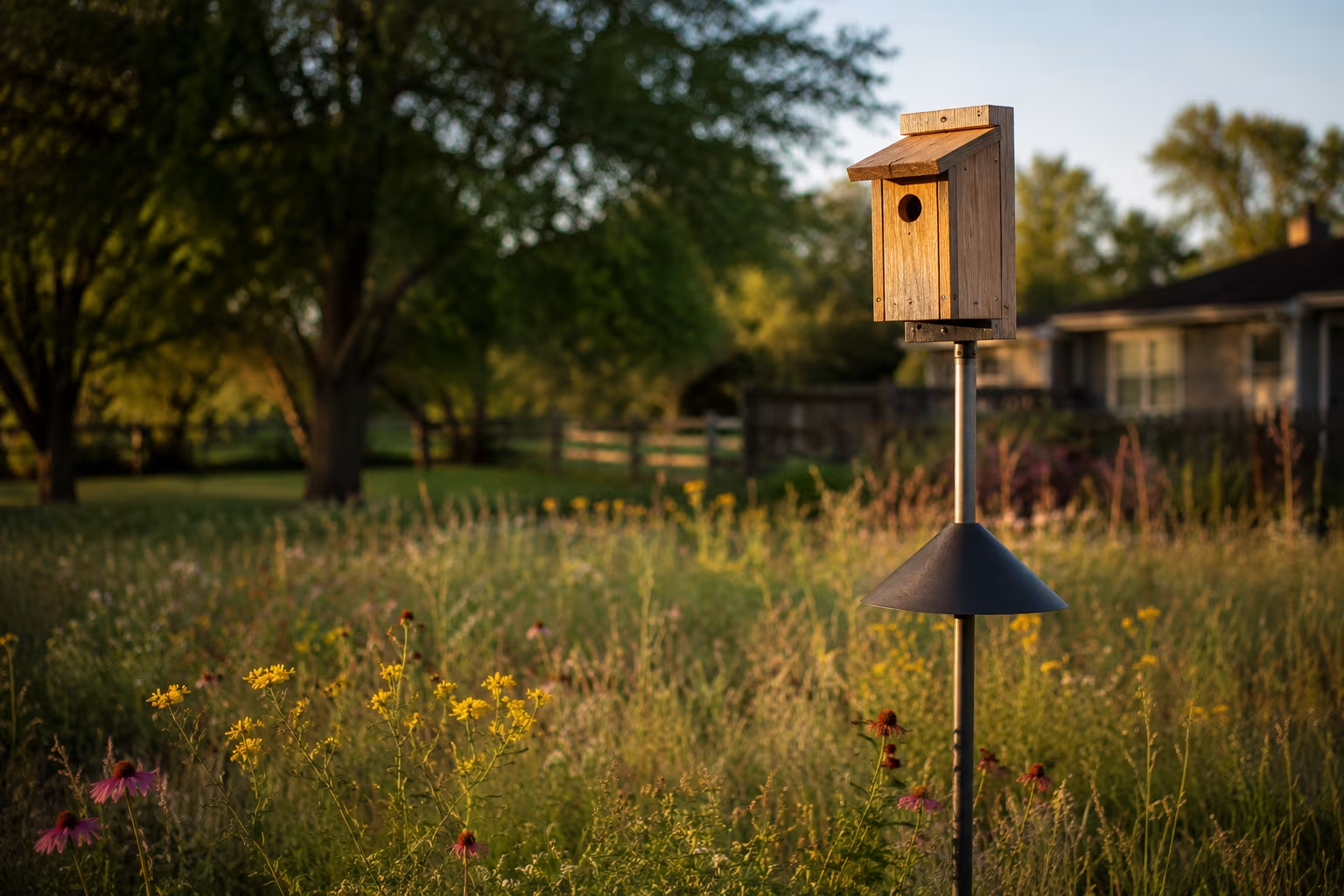
This is probably the biggest factor. Bats are sun worshippers, believe it or not! They need warmth to survive and thrive, especially for raising their young. Your bat house needs direct sunlight for 6-8 hours a day. Think south or southeast facing.
Mount it high – at least 15 feet off the ground, but 20 feet is even better. It needs to be away from tree branches, utility lines, and anything else a predator could use to get close. Ideally, there should be a clear flight path to and from the entrance. Also, bats love to be near a permanent water source, like a pond or stream, so if you have one nearby, that's a huge bonus.
Mistake 2: Impatience (The Waiting Game)
You've built it, you've painted it, you've mounted it perfectly. Now you wait. And wait. And maybe wait some more. It can take bats a year or even two to discover and adopt a new roost. Don't get discouraged if you don't see activity right away.
Keep an eye out for guano (bat droppings) accumulating on the ground beneath the house – that's your first sign of residents! Remember, bats are creatures of habit and will often return to the same roosts year after year once they find a good one.
Mistake 3: Treating the Wood with the Wrong Stuff
While you want to protect your bat house from the elements, you absolutely cannot use pressure-treated wood or harsh chemical sealants. Bats are incredibly sensitive to chemicals and fumes. These can be toxic or simply repel them.
Stick to untreated exterior-grade plywood for the construction and only use water-based, non-toxic exterior paint on the outside surfaces. Never paint or seal the interior surfaces; those need to remain natural and rough.
Mistake 4: Not Caulking All the Seams
This might seem like a small detail, but it's really important. Any unsealed gaps or cracks create drafts, which make it hard for the bats to maintain the consistent warm temperature they need. Imagine trying to sleep in a tent with big holes in it on a chilly night – not exactly cozy!
Go over every joint and seam with that exterior caulk. It not only seals against drafts but also keeps out other critters like wasps that might try to nest in your bat house before the bats get there. A well-sealed house is a happy bat house.
Building a home for bats isn't just about the structure; it's about creating a safe, warm, and inviting refuge for tiny, bug-eating superheroes.
Frequently Asked Questions
Will bats fly into my hair or attack me?
That's a super common myth, and it’s totally untrue! Bats are actually quite shy and have excellent sonar, so they’re really good at avoiding obstacles, including people. They're much more interested in catching insects than flying into your hair. I've spent hours watching them emerge from my bat house, and they've never once come close to me.
How many bats can one of these houses hold?
A single-chamber bat house like the one we built can comfortably house a colony of 50-100 bats, sometimes even more! The exact number depends on the species and how tightly they roost. If you find your house is full, you can always build and install another one nearby to accommodate a larger colony.
What if I build it and no bats come?
Don't despair if it takes a while! As I mentioned, patience is truly key here. The most common reasons bats don't move in are improper location (not enough sun, too low, too many obstructions) or not enough time. Double-check your placement for sun exposure and height. If after a year you still have no luck, try relocating it slightly. Sometimes it just takes that perfect spot. My first house took 14 months!
Do I need to clean the bat house?
Nope, generally you don't! Bats are actually very clean animals, and their droppings (guano) just fall out the bottom. Cleaning can disturb them and might even deter them from returning. If you absolutely feel the need to inspect or clean it for some reason (maybe you want to check for wasp nests before bats arrive), do it in late winter or early spring before bats return for the season.
Can I just buy a bat house instead?
You absolutely can! There are many good quality bat houses available for purchase. However, building one yourself is usually quite a bit cheaper, and there's a real sense of accomplishment knowing you crafted it with your own hands. If you do buy one, just make sure it meets all the critical requirements we discussed: dark color, rough interior, proper chamber size, and good ventilation. Some commercially available houses are pretty, but not actually bat-friendly, so do your research!
The Bottom Line
Building a bat house for your backyard isn't just a fun DIY project; it's a fantastic, natural way to control mosquitoes and support local wildlife. It might take a bit of effort and some waiting, but the reward of seeing those little insect-eaters swoop out at dusk is incredibly satisfying.
Don't worry about making it perfect. My first one was a little rough around the edges, but the bats didn't care! The most important thing is to give them a safe, warm, and inviting place to call home. You've got this!