Decor

Why You Should Switch to Warm Dimmable Lighting for a Stress-Free Home
Why You Should Switch to Warm Dimmable Lighting for a Stress-Free Home

Why You Should Switch to Warm Dimmable Lighting for a Stress-free Home

Hey there, makers! ✋ Do you ever walk into a room, flip the light switch, and immediately feel... off? Like the harsh glare just zaps whatever calm you had left after a long day?

I totally used to feel that way. For years, I just lived with whatever bulbs came in my house, not really thinking about how they made me feel. But then I started experimenting, and let me tell you, upgrading my lighting has been a small change that's made a huge difference in my home, especially for unwinding after a crafting marathon.

Today, I want to chat about why warm dimmable lighting isn't just a fancy trend. It's a simple, budget-friendly way to make your home feel like a cozy, stress-free sanctuary. We'll dive into what it is, how to get it, and how it can totally change your vibe.

Why This Actually Matters

Okay, so why are we even talking about light bulbs on a craft blog? Because how you light your space impacts everything. It affects your mood, your energy levels, and even how well you sleep at night.

Think about it: have you ever tried to relax under super bright, almost blue-toned lights? It’s tough, right? It feels more like an office or a hospital waiting room than a cozy home.

I remember one winter, I was trying to get into knitting, but my living room felt so cold and stark. The overhead light was just this glaring white. I found myself feeling more agitated than relaxed, and honestly, I barely picked up my needles that season.

It wasn't until I swapped out those harsh bulbs for something softer that I realized the light itself was contributing to my stress. Once I made the switch, my crafting nook felt instantly more inviting, and just sitting down with a project felt like a real escape.

This isn't just about aesthetics; it's about creating an environment that supports your well-being. Good lighting can actually help you de-stress, wind down, and enjoy your home more.

It can turn your chaotic evening rush into a calm transition. It can make your garage workshop feel a little less intimidating when you’re starting a new project. For me, it made my crafting more enjoyable and my evenings truly relaxing.

So, if you're looking for a simple change with a big impact, trust me, this is where you start.

What Even is Warm Dimmable Lighting?

Alright, let's break this down without getting too technical. When we talk about "warm" lighting, we're mostly talking about something called color temperature. This is measured in Kelvin (K), and it tells you how yellow/orange or blue/white a light appears.

Lower Kelvin numbers, like 2700K to 3000K, give you that cozy, yellowish glow, similar to old incandescent bulbs or candlelight. Higher numbers, like 4000K or 5000K, are brighter and whiter, sometimes with a blue tint.

"Dimmable" just means you can adjust the brightness of the light. You can take it from super bright when you need to focus on a detailed project, all the way down to a soft, barely-there glow for winding down.

Combine "warm" and "dimmable," and you get the best of both worlds: light that feels naturally comfortable and that you can tailor to any moment. It's not just on or off anymore; it's a whole spectrum of ambiance.

This combo helps replicate natural light cycles, which our bodies are hardwired for. Think about how the sun changes throughout the day – bright and cool in the afternoon, warm and soft at sunrise and sunset. We're aiming for that kind of natural rhythm indoors.

It's about having control, making your lighting work for you instead of against you. No more harsh lights assaulting your eyes after dark.

It's More Than Just a Light Switch

You might be thinking, "I already have light switches, Laura!" And you do! But a regular switch is like an on/off button for your mood. Warm dimmable lighting gives you a dimmer knob for your daily stress levels.

It’s about intentionality. Instead of passively accepting whatever light your fixtures throw out, you're actively choosing the atmosphere. This slight shift in mindset really helps you create a more mindful home.

  • Color Temperature Control - This is the "warm" part. You're picking bulbs that naturally emit a softer, more inviting hue. We're talking about those lovely yellows and soft oranges, not the stark whites or blues that scream "productivity."
  • This warm light helps tell your body it's time to relax. It doesn't suppress melatonin production, which is crucial for a good night's sleep. Think of it like a visual warm hug for your brain.

  • Brightness Adjustment - This is the "dimmable" part. Imagine being able to turn your crafting space into a brightly lit studio when you're gluing intricate paper flowers, then smoothly dialing it down to a soft, ambient glow when you're tidying up before bed.
  • This flexibility is amazing. You can have plenty of light for detailed tasks without being stuck with that intensity all the time. It really gives you command over your environment.

  • The Synergy of Both - When you have both warm color and dimmability, you get true ambiance. You can adjust not just how bright it is, but also the feeling of the light. It's like having a mood ring for your home, but way more effective.

    This combination creates layers of light that make a room feel deeper, richer, and much more inviting. It turns a flatly lit space into something truly special and personalized.

How to Actually do It

Switching to warm dimmable lighting might sound like a big project, but it really doesn't have to be. You can take it one room, or even one lamp, at a time. It’s all about making small, manageable changes.

My first step was replacing one annoying overhead bulb in my entryway. It made such a noticeable difference that I got hooked. You don’t need to be an electrician or spend a fortune to get started.

Here’s how I went about it in my own home, and how you can too.

Step 1: Assess Your Current Lighting

Before you buy anything, take a good look at what you’ve got. What kind of bulbs are currently in your lamps and overhead fixtures? Do they feel harsh, bright, or cold?

Pay attention to the specific rooms where you spend the most time relaxing or winding down. For me, that was my living room and bedroom, plus my crafting nook where I do a lot of paper work.

Make a mental note (or even a little list) of the fixtures you want to change first. Maybe it’s just the main overhead light in your bedroom, or the lamps in your living room. Don’t feel like you have to tackle every single light bulb in your house at once.

I remember discovering some of my old bulbs were 5000K, which is super bright, almost blue-white. No wonder I felt like I was constantly under interrogation! Just knowing that helped me understand why I felt so uneasy in certain rooms.

Step 2: Choose the Right Bulbs

This is where the magic starts. You’ll want to look for LED bulbs that specify both their color temperature and that they are dimmable.

For warm light, aim for bulbs in the 2700K to 3000K range. I usually go for 2700K because I love that super cozy, amber glow. Read the packaging carefully – it will always list the Kelvin (K) number and usually say "Dimmable" prominently.

LEDs are great because they last a really long time and use much less energy than old incandescent bulbs. This means they’re cost-effective in the long run. I usually grab multi-packs at my local hardware store; you can often find a 4-pack of dimmable 2700K LED bulbs for around $10-$15.

Don't forget to check the base type (E26 for standard screw-in, GU10 for spotlights, etc.) to make sure they fit your existing fixtures. I once bought a whole box of bulbs with the wrong base, which was a silly mistake I won't make again.

Step 3: Consider Dimmer Switches or Smart Bulbs

Here you have a couple of options for making your lights dimmable. The first is to replace your existing wall switches with dimmer switches. This usually requires a little bit of basic electrical knowledge, or hiring an electrician if you’re not comfortable with wiring.

I installed my first dimmer switch in my workshop after watching a few YouTube tutorials – it took about 30 minutes and wasn't as scary as I thought. Just remember to turn off the power at the breaker box first!

The second, and often easier, option is to use smart bulbs. These bulbs connect to Wi-Fi or Bluetooth and can be controlled with an app on your phone, a smart home assistant (like Alexa or Google Home), or sometimes with a small remote. Many smart bulbs offer a full spectrum of color temperatures and dimmability, all within the bulb itself.

Smart bulbs are super flexible because you don't need to touch your wiring at all. They often cost a bit more per bulb, but they offer incredible control and features. I started with a smart bulb in my reading lamp just to test the waters, and it made me a believer.

Step 4: Think About Fixtures and Layers

It’s not just about the bulbs; it’s also about where the light comes from. Overhead lights can be great for general illumination, but they often create a flat, less inviting look. Think about adding layers of light.

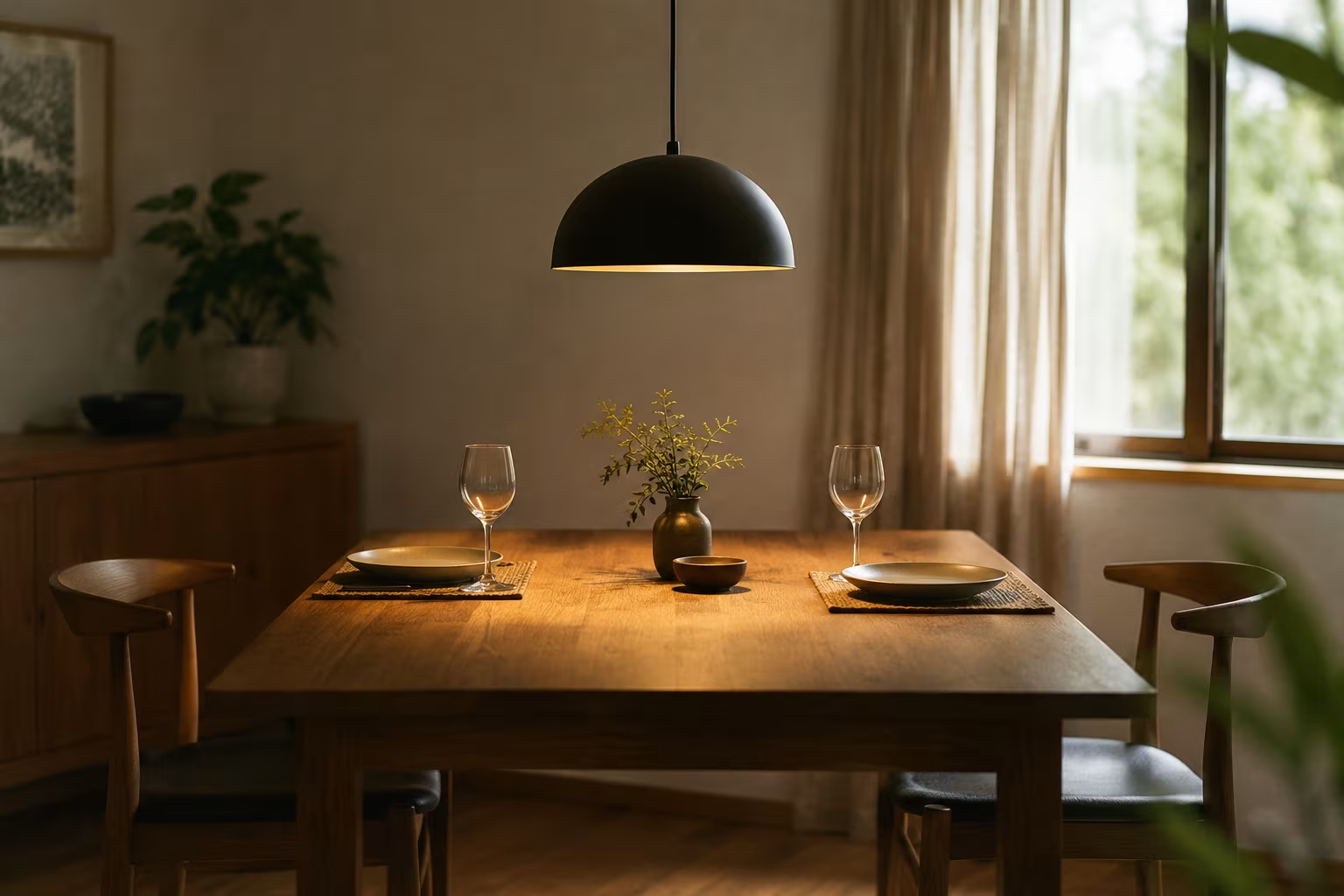
Table lamps, floor lamps, and even sconces can create a more nuanced and cozier atmosphere. These smaller fixtures allow you to spread light at different heights and angles, which makes a room feel more dynamic and welcoming.

For my crafting table, I have an adjustable desk lamp with a warm dimmable bulb. When I’m working on something intricate, I can have it bright and focused. But when I’m just sketching or planning, I can dim it way down for a softer glow.

Consider how light interacts with your decor. A light shining on a textured wall or a piece of art can add real depth to your room. It’s all about creating visual interest, not just plain brightness.

Step 5: Start Small, Test Areas

Don’t feel pressured to overhaul your entire home at once. Pick one area that you feel needs the most improvement – maybe your bedroom, your living room, or that one sad corner where you try to relax.

Replace just one or two bulbs in that area with warm dimmable ones. Live with it for a few days, and pay attention to how you feel. Do you notice a difference? Does the room feel more inviting? More relaxing?

For me, starting with my bedside lamp was a revelation. Being able to dim the light low enough to read comfortably without straining my eyes, and then dim it even further before turning it off, made such a difference in how quickly I fell asleep.

This incremental approach helps you figure out what works best for your specific needs and preferences without a huge upfront investment of time or money. It builds confidence for future changes, too.

Step 6: Experiment with Placement and Zoning

Once you’ve got some dimmable warm bulbs in place, start playing around with them. Try dimming some lights completely while leaving others a little brighter to create "zones" within a room.

For instance, in my open-plan living and dining area, I dim the dining room lights super low in the evening, creating a soft backdrop, while keeping the living room lamps slightly brighter for conversation or reading.

You can use light to highlight specific features, like a gallery wall or a favorite bookshelf. Or you can use it to create a cozy nook for reading or crafting, separating it visually from the rest of the room.

Think about where light comes from – overhead, eye-level, or from below. A mix of these can create a much more comfortable and interesting space. I sometimes even use small, battery-operated LED puck lights in shelves for a soft glow.

Step 7: Automate for Convenience (optional)

If you’re using smart bulbs or have a smart home system, consider setting up schedules or scenes. This is where it gets really fun and convenient. You can program your lights to dim gradually in the evening, mimicking the sunset.

I have my bedroom lights set to slowly dim starting an hour before my usual bedtime. It’s a subtle cue to my body that it’s time to start winding down, and it makes getting ready for sleep feel much more natural.

You can also create "scenes" – for example, a "Crafting Time" scene that brightens your task light and provides good general illumination, and a "Movie Night" scene that dims everything to a cozy glow.

This level of automation takes the effort out of adjusting lights manually every day. It truly integrates the stress-free benefits into your daily routine without you even having to think about it.

Step 8: Don't be Afraid to Adjust

Your lighting needs might change depending on the season, your mood, or what project you’re working on. The beauty of dimmable lighting is its flexibility. Don’t feel like you have to find one perfect setting and stick to it forever.

Sometimes, on a really gloomy winter day, I might actually want my lights a little brighter during the afternoon. Other evenings, if I’ve had a particularly long and busy day, I might dim them even lower than usual for extra coziness.

It’s all about listening to your body and your home. Treat your lighting like another tool in your creative arsenal – something to be played with and adapted to suit the moment. There's no single right way to do it.

I’ve definitely tweaked my light settings over time as my routines changed. This adaptability is one of the biggest reasons I love this approach to home lighting so much.

Making It Stick / Common Mistakes

Getting started is often the easiest part. Making it a consistent part of your home environment takes a little awareness. The biggest mistake people make is trying to do too much too fast, or not understanding the basics of their new bulbs.

One common pitfall is buying "dimmable" bulbs that aren't actually compatible with your existing dimmer switch, or vice versa. Always check the packaging and your switch type. Some older dimmer switches aren't designed for LEDs and can cause flickering.

Another mistake I've seen (and made!) is mixing different color temperatures in the same room. If you have one lamp with 2700K and another with 4000K, it can create a jarring and inconsistent look. Try to keep the K-value consistent within a single space.

Also, don't overlook task lighting. While general ambient light should be warm and dimmable, you might need a focused, slightly brighter light for detailed crafting or reading. Just make sure that task light is also dimmable so you can control its intensity when not in use.

Finally, some people think it’s too expensive or too complicated. But as we discussed, you can start small and iterate. The benefits to your mood and comfort are well worth the initial, often small, investment.

Good lighting isn't just about seeing. It's about feeling. It shapes your comfort and your calm.

Remember, it’s a process. You’re not just swapping out bulbs; you’re intentionally crafting an atmosphere. Give yourself grace and time to find what really works for you and your home.

Frequently Asked Questions

Is It Expensive to Switch Everything?

Not at all! You absolutely don't need to switch everything at once. Start with one lamp or one overhead fixture in a room where you want to feel more relaxed. Dimmable LED bulbs are pretty affordable these days, often around $10-$15 for a multi-pack, and they last for years. You can definitely swap them out gradually.

What's the Difference Between 2700k and 3000k?

Both 2700K and 3000K are considered "warm" light, but there's a subtle difference. 2700K is a bit warmer, with a slightly more yellowish or amber tint, very much like a traditional incandescent bulb. 3000K is still warm but a touch whiter, closer to a soft white. I personally prefer 2700K for ultimate coziness, but 3000K is also a great choice if you want something slightly less yellow.

Can I Use Smart Bulbs with Existing Dimmer Switches?

Generally, no, and it’s a common mistake that causes flickering or damage. If you have a physical dimmer switch on your wall, you should use regular dimmable LED bulbs (not smart bulbs). Smart bulbs are designed to be dimmed through their app or smart hub, so using them with a traditional dimmer switch can cause compatibility issues and prevent them from working correctly. Pick one or the other for each fixture.

Will This Really Help Me Sleep Better?

Yes, it really can! Exposure to bright, cool-toned light (especially blue light from screens and harsh white bulbs) in the evening can suppress your body's production of melatonin, the hormone that helps you feel sleepy. Switching to warm, dimmable lights in the hours before bed signals to your body that it's time to wind down, promoting better sleep hygiene and aiding natural melatonin release. It's not a magic bullet, but it definitely helps.

What if I Need Bright Light for My Crafts?

That's totally fair! Many crafts, like detailed painting or intricate paper cutting, require good, bright illumination. The solution is using warm dimmable lighting strategically. Keep your overhead or general room lighting warm and dimmable for ambiance, but invest in a dedicated, warm dimmable task light for your crafting area. You can crank that task light up to full brightness when you need to focus on details, then dim it down or turn it off when you're done. It's all about balance and flexibility.

The Bottom Line

Changing your lighting might seem like a small thing, but it has a surprisingly big impact on how your home feels and how you feel in it. Embracing warm dimmable lighting is about creating a space that nurtures you, a sanctuary where you can truly relax and enjoy your hobbies.

You don't need to do it all at once. Just swap out one bulb in your favorite lamp, or pick up a single smart bulb for your bedside. Notice the difference it makes. I think you'll be pretty amazed.

Give yourself the gift of a calmer, cozier home. It’s a simple upgrade that pays dividends in comfort and peace. Happy crafting, friends! ❤️

Laura Hayes
Written by

Laura Hayes

Maker and craft enthusiast from Portland, Oregon. I've been documenting my DIY journey since 2019 - everything from woodworking to paper crafts. When I'm not in my garage workshop, you'll find me hunting for supplies at thrift stores.