
DIY Room Decor Ideas for Small Apartments
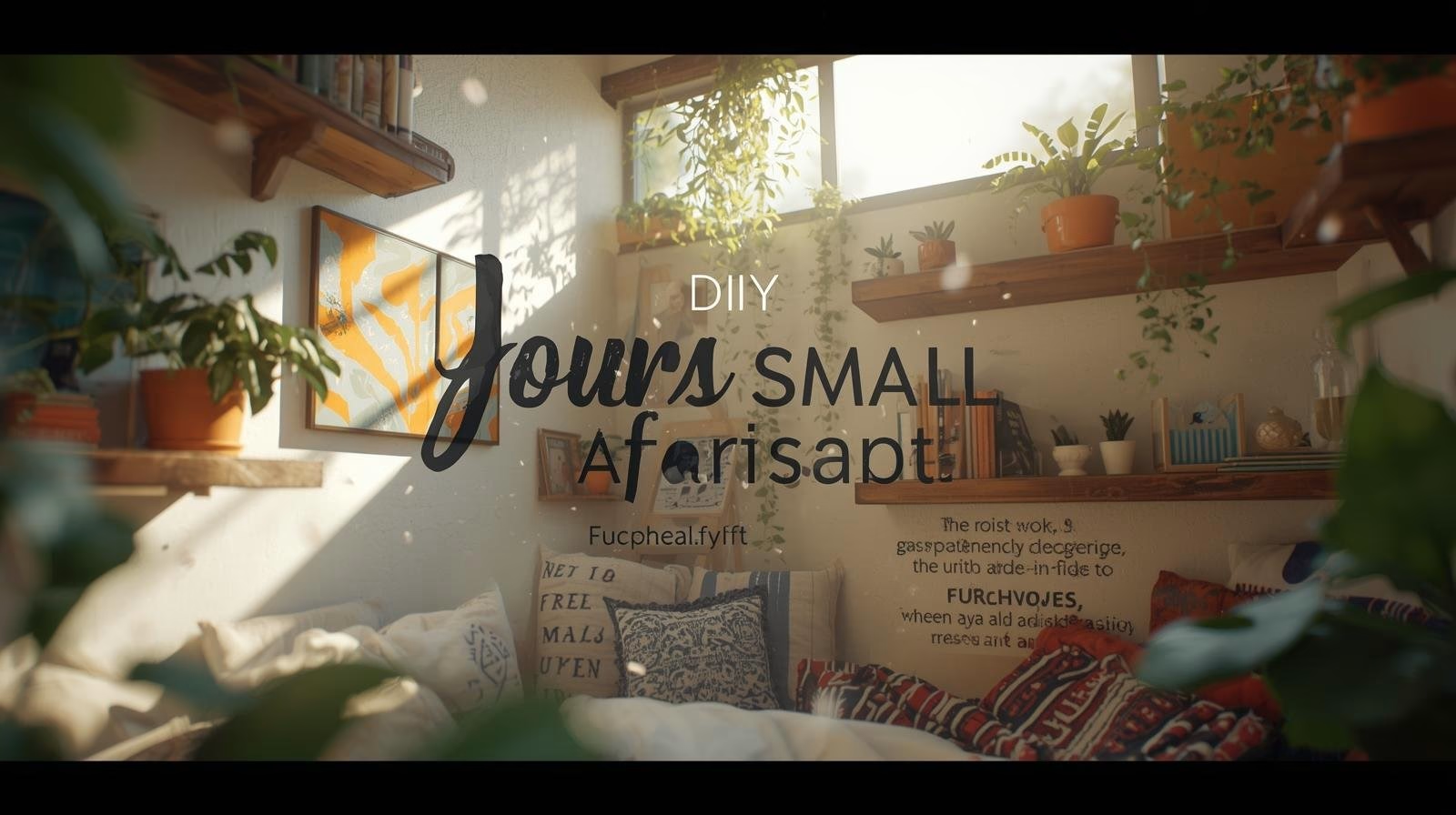
A small apartment forces a trade-off between style and space, and store-bought decor rarely fits the exact odd corner you are trying to solve. Building your own pieces gets around that. DIY projects let you match a shelf to an alcove, hide storage inside something decorative, and add personality for a fraction of retail prices, all without over-filling the room.
The projects below are chosen for tight quarters: wall-mounted and vertical solutions that free up floor space, dual-purpose storage, and lighting that makes a room feel larger. Most use basic tools and materials you can reuse across many builds.
Why DIY works so well in small spaces
Small apartments come with predictable problems, limited storage, little wall space, and rooms that have to do more than one job. Handmade decor answers each of these because you build to the dimensions in front of you. A shelf can be exactly as deep as the wall allows; a bench can hide blankets inside; a fold-away desk can disappear when the room becomes a living room again.
Cost is the other advantage. Furniture and accessories marketed for small spaces often carry a premium, yet a plywood floating shelf or a crate bookcase costs a fraction of the store version and fits better. DIY here is less a hobby than a practical strategy for living well in a small footprint.
Tools and materials worth keeping on hand
You do not need a full workshop. A modest kit covers the great majority of apartment projects:
- Basic tools: a hammer, a set of screwdrivers, a tape measure, pliers, a small level, and a cordless drill.
- Adhesives and fasteners: super glue, a hot glue gun, double-sided mounting tape, plus assorted nails and screws.
- Painting supplies: brushes, a small roller, painter's tape, and a couple of jars of versatile acrylic or latex paint.
- Crafting materials: fabric scraps, cotton cord, offcut wood, mason jars, picture frames, and stencils. For fiber projects, the Craft Yarn Council publishes standard yarn weights and hook sizes worth bookmarking.
- Upcycling finds: old crates, pallets, and household items headed for the bin.
With these on a shelf, most projects skip the extra trip to the hardware store, and a few reusable tools pay for themselves across a year of small builds.
Wall art and vertical decor
Empty walls make a small room feel bare, and they are the one surface you can decorate without sacrificing floor space. Stretch a blank canvas, lay painter's tape in crisscrossing lines, and paint over it in two or three colors; peel the tape once dry for crisp modern shapes, the same low-skill approach behind geometric string art with no artistic talent required. Leftover fabric stretched over cardboard and dropped into a frame adds texture and color for almost nothing.
Combine display with storage by mounting shelves rather than hanging only pictures. A set of floating shelves with hidden brackets made from reclaimed wood or plywood holds books, plants, and candles while keeping the floor clear. Warm metallic hardware and accents give plain builds a finished look, which is part of why warm metallics are replacing chrome in many homes. A macrame wall hanging in cotton cord adds soft texture in an afternoon.
Storage and space-saving projects
The best small-space projects earn their keep twice, as decor and as storage. Attach caster wheels to a wooden crate or a repurposed drawer to roll it under the bed for shoes or linens. Mount a painted pegboard and hang hooks, small shelves, and baskets for utensils, craft supplies, or tools without eating into a drawer. A wall-mounted fold-down board on sturdy hinges becomes a desk or dining table that folds flat against the wall when you are done. The same instinct for vertical, dual-purpose solutions carries over to any home office storage system in a compact room.
| Project | Main materials | Approx. cost | Difficulty |
|---|---|---|---|
| Geometric tape canvas art | Canvas, painter's tape, acrylics | Under $20 | Beginner |
| Floating shelf | Plywood, hidden brackets, screws | $15–30 | Intermediate |
| Under-bed rolling box | Crate, caster wheels, paint | $10–25 | Beginner |
| Pegboard organizer | Pegboard, hooks, baskets | $20–35 | Beginner |
| Fold-down wall desk | Board, folding hinges, brackets | $30–60 | Intermediate |
Lighting and upcycling
Harsh overhead light flattens a small room, while warm, layered lighting makes it feel larger and cozier. Drill a hole in a mason jar lid, fit a socket, and cluster three or four jars into a pendant fixture. Drape string lights across a ceiling or behind a sheer curtain for soft ambient glow, and revive a dated lamp by painting or stenciling the shade.
Upcycling closes the loop between saving money and reducing waste. Stack and secure wooden crates into modular bookshelves, lean a vintage ladder against the wall to hold blankets or trailing plants, wrap tin cans in paint or rope for desk organizers, and cut or paint wine bottles into vases and candle holders. Because these pieces are made rather than bought, they fit the space exactly and carry a character no catalog item repeats, and the broader practice of upcycling keeps usable material out of the landfill. Start with one project that solves your most annoying problem, a cluttered entry, a desk with nowhere to go, and build from there; in a small apartment, each fix compounds, and the finishing touches, sanded edges, sealed paint, a consistent color scheme, are what make handmade work read as polished rather than improvised.
Related Posts

Toilet Seat Slow-Close Hinge Replacement
A broken slow-close hinge makes the toilet seat slam or fail to stay up. Replacement is a...

Drywall Corner Bead Replacement After Damage
Damaged drywall corners with dented or split corner bead show ugly visible damage. The...

Strip Painted Brass Hardware Without Eating the Patina
The slow-cooker method strips paint from brass cleanly while keeping the aged surface intact....
Bathtub Resealing: When Silicone Beats Caulk and Vice Versa
Reseal a bathtub right: 100% silicone at the flexing tub-to-tile joint, acrylic caulk only on...
Comments
No comments yet. Be the first to share your thoughts!