
How to Choose a Minimalist Color Palette That Doesn't Feel Cold
A minimalist color palette goes wrong in a predictable way: strip out the color, simplify everything, and the room lands somewhere between a doctor's office and an empty rental. The fix isn't more color, it's paying attention to undertones, texture, and light. Here is how to build a limited palette that reads as calm and warm rather than sterile.
What a Minimalist Palette Actually Is
Minimalist doesn't mean black and white, and that misconception is why so many attempts feel cold. A minimalist palette is about restraint: choosing a limited set of colors, usually three to five total, and letting them and their textures carry the room instead of competing for attention.
The aim is cohesion, not blankness. When every element belongs to the same small family of tones, the eye stops sorting mismatched pieces and the space reads as quiet. A useful way to think about how those few colors relate to each other is through basic color scheme structures, monochromatic, analogous, and so on, which describe how a limited set stays harmonious.
Why Palettes Feel Cold: It's the Undertones
"Cold" almost always traces back to undertone, the subtle secondary color hiding inside a neutral. A white can lean blue or lean cream; a gray can lean blue or lean brown. Lean too many elements cool at once, with nothing to counterbalance, and the room turns icy.
The usual culprits are worth naming so you can spot them:
- Cool undertones everywhere: blues, blue-grays, and blue-based whites are crisp, but unbalanced they read as clinical.
- No natural texture: smooth, glossy, man-made surfaces with no wood, linen, or weave feel manufactured.
- Nothing warm for contrast: even a cool scheme needs one grounding warm element.
- Stark bright white: a pure brilliant white with no cream or greige softening it goes harsh under many lights.
None of these are wrong on their own, a single cool gray wall can be beautiful. It's the pile-up without counterweight that produces the cold zone.
Start With Your Hero Neutral
Every minimalist palette needs a base color that covers the largest surfaces, the "hero" neutral. It can be a white, a greige (gray plus beige), a warm gray, or a true beige. The decision that matters more than the color name is its undertone.
To keep a room from feeling cold, choose neutrals with warm or neutral undertones: creamy whites, off-whites with a hint of beige, grays tinted brown or green, true beiges. The test is simple and cheap, hold paint swatches against a sheet of pure printer paper. Next to true white, a swatch's hidden undertone jumps out, and the "white" you thought was neutral suddenly looks pink, yellow, or blue.
Greige, a blend of gray and beige, is a reliable default for exactly this reason: it carries enough warmth to avoid the icy feel of a blue-gray while staying neutral enough to sit under almost any accent. If you want a genuine off-white, look for one described as having a cream, taupe, or "warm" base rather than a "cool" or "crisp" one on the swatch card. The name on the chip often tells you the undertone before you even hold it up.
Add One or Two Gentle Accents
Accents in a minimalist scheme should be muted and drawn from nature, not loud pops. One or two is the ceiling, and they should share the warm or balanced undertone logic of the base.
| Palette role | Warm option | Cooler-but-inviting option |
|---|---|---|
| Hero neutral (base) | Creamy off-white | Warm greige |
| Secondary neutral | Natural oak wood tone | Soft mushroom gray |
| Accent 1 | Terracotta or dusty rose | Sage green |
| Accent 2 (optional) | Soft peach / apricot | Desaturated denim blue |
Sage green sits well against warm grays and creams; dusty rose and terracotta add warmth without shouting; a desaturated, slightly warm blue can stay inviting where a bright blue would chill the room. Natural wood functions as an accent color even though it isn't paint, count it as one of your chosen tones rather than an afterthought.
A helpful way to distribute a limited palette is the 60-30-10 guideline: roughly 60 percent of the room in the hero neutral, 30 percent in the secondary neutral or wood tone, and 10 percent in the accent. Keeping accents to that small share is what stops a "minimalist" scheme from creeping back into a busy one. The muted quality matters as much as the proportion, nature-derived colors read calm precisely because they're slightly grayed rather than fully saturated, so a dusty terracotta belongs where a pure orange would not.
Layer Textures, This Is the Real Trick
Texture is the single most effective way to keep a limited palette from feeling flat, because it adds visual interest and warmth without adding another color. This is where a room in three colors still feels rich.
Reach for tactile natural materials: a chunky knit throw, a linen curtain, a jute rug, a matte ceramic vase, a wooden frame, a rattan basket. Even a textured neutral wall finish adds depth that flat paint can't. Bringing in natural textures is often what a painted piece is missing, a gray cabinet sanded to a satin finish, set on a woven mat with leather pulls, lands warm where the same cabinet on a bare floor read cold. A $5 rattan basket can do more for warmth than an expensive piece of art.
Contrast between textures does the work that contrast between colors would in a busier scheme: a smooth matte wall beside a rough jute rug and a nubby linen cushion reads as layered and considered even though the whole group stays in one or two neutrals. Aim for a mix of hard and soft, and matte over glossy, glossy surfaces bounce light in a way that can tip a minimalist room toward cold.
Pair texture with restraint in what you display. Negative space is part of the palette, the empty areas let the colors and textures breathe. When you do place an object, make it intentional: one handmade pottery piece on an open shelf reads calmer and more deliberate than a shelf packed with small things.
Don't Ignore the Lighting
The same paint looks warm or cold depending on the light hitting it, so lighting is effectively part of the palette. Warm-toned bulbs, lower on the Kelvin scale and usually labeled "soft white" or "warm white," around 2700K, make any neutral read cozier; cool white and daylight LEDs push it toward clinical. The color temperature of a bulb is the number to check on the box.
Natural light matters too. A north-facing room receives cooler daylight, so it often needs warmer paint choices to compensate; a south-facing room can carry a slightly cooler neutral without tipping cold. This is why testing in place is essential, buy sample pots, paint a large swatch, and look at it morning and evening before committing. A warm gray can turn battleship-gray under different light, and repainting a whole cabinet to discover that is an avoidable afternoon.
Common Mistakes That Turn It Cold
A few recurring errors undo an otherwise warm scheme:
- Pure black and white only. The hardest combination to warm up, it demands heavy texture and careful light. Substitute charcoal or espresso brown for stark black and a creamy white for brilliant white.
- Treating lighting as an afterthought. Cool bulbs sabotage warm paint; match bulb temperature to the mood you want.
- Forgetting the ceiling and floor. These are the largest surfaces in the room. A slightly off-white ceiling softens the whole space, and natural wood floors or a large neutral rug anchor warmth.
- Too many clashing wood tones. Wood adds warmth, but mixing a cool gray-brown with a strongly red cherry creates visual noise. Stick to one or two complementary tones.
For a low-risk start, work one surface at a time: refinish a thrifted piece of wood furniture in a warm neutral, set it against a jute mat or a linen runner, and light it with a 2700K bulb. Get one corner reading warm-minimalist first, prove the undertone-plus-texture approach on a small scale, then extend the same three-to-five color logic across the room.
Related Posts
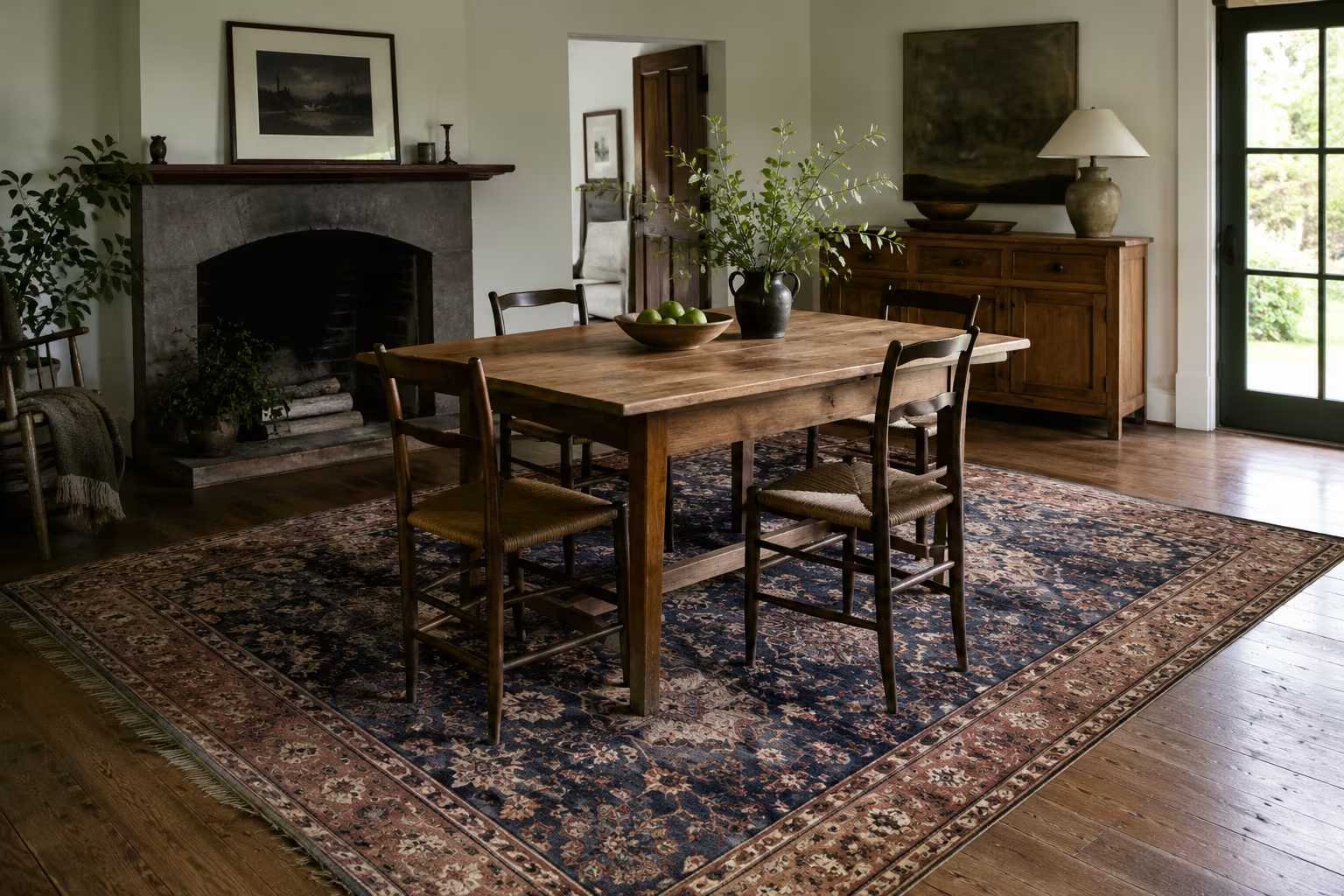
Area Rug Size Under Dining Table
A rug too small under dining table looks like a mistake. Chairs must stay on rug when pulled out.

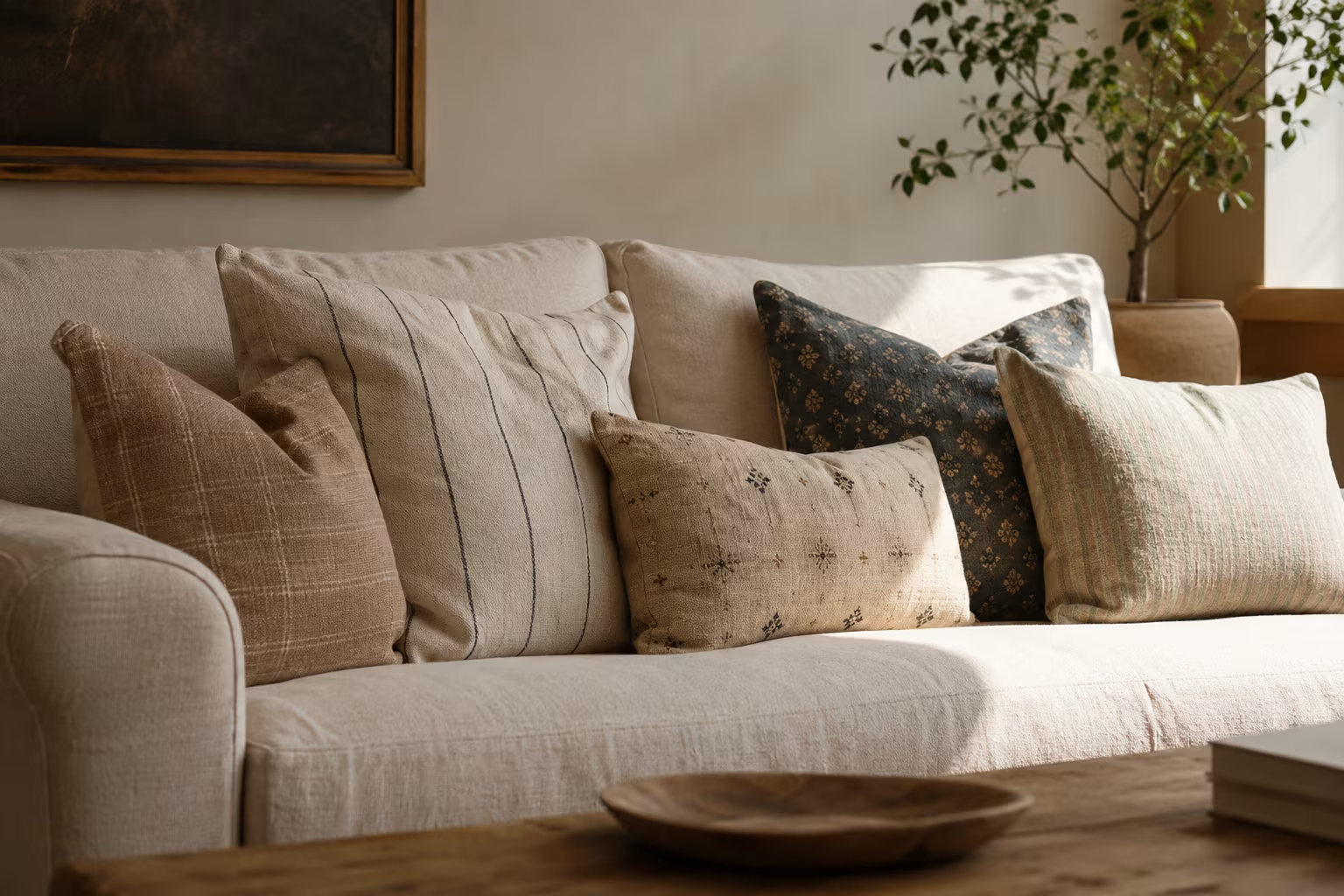
Sofa Pillow Combinations That Don't Fight
Throw pillows pile up over years. Rules for color, texture, pattern, and size.
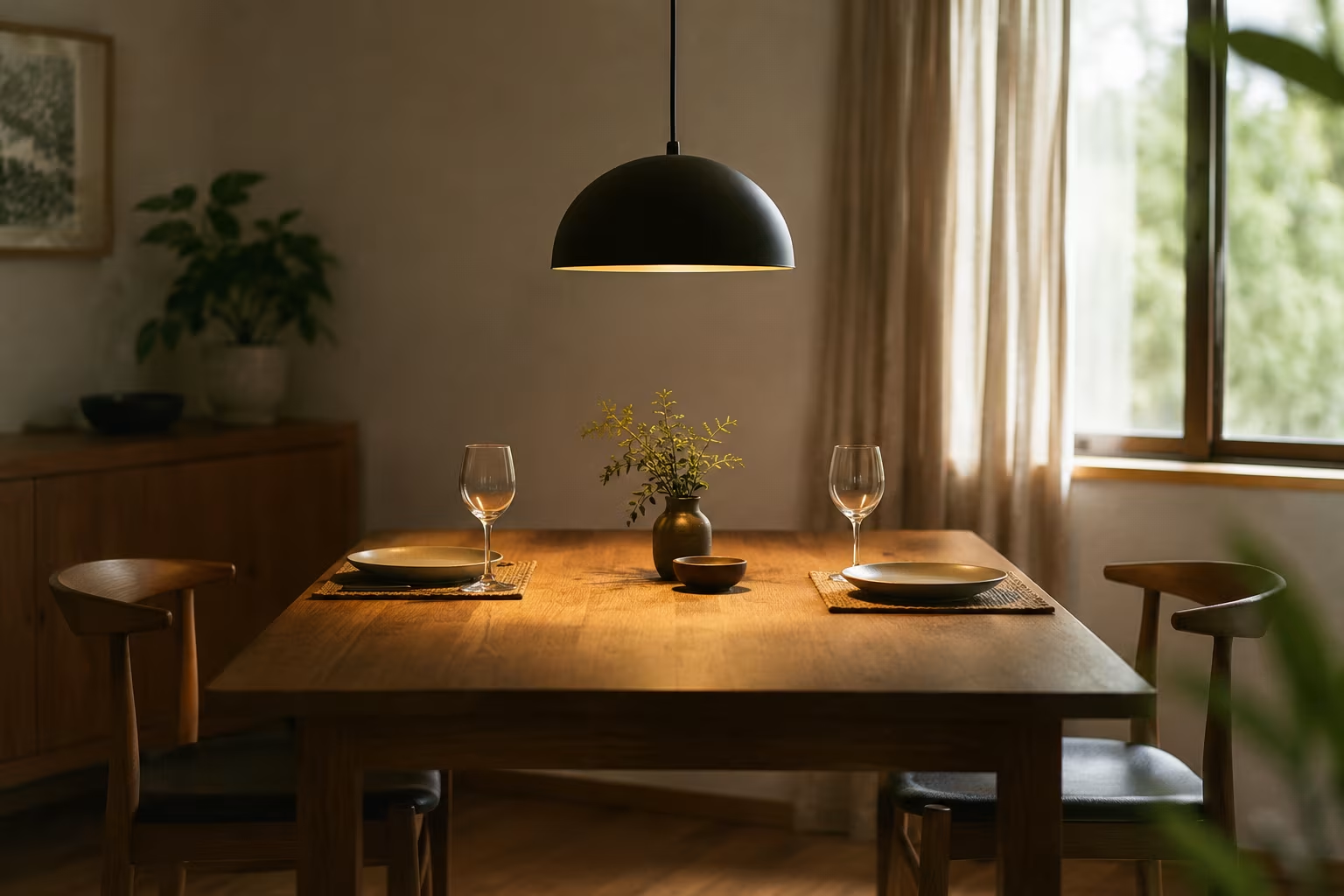
Light Fixture Height Over Dining Table: The Rule
The right pendant light height over a dining table is calculated, not guessed. The standard...
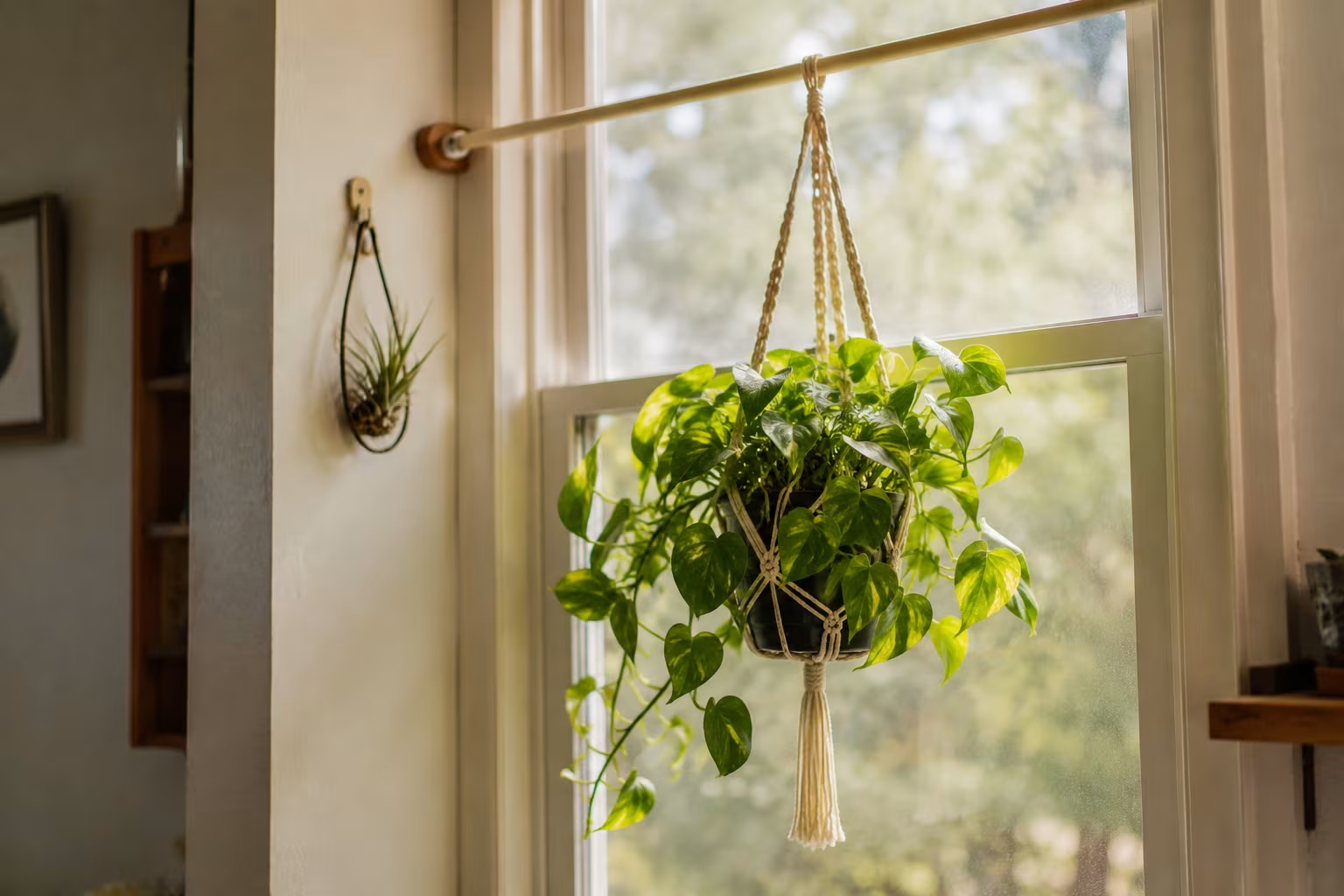
Hanging Plants Without Ceiling Hooks for Renters
Hanging plants brighten any room but drilling into the ceiling isn't always an option....
Comments
No comments yet. Be the first to share your thoughts!